1
Check Our Risk-Free Booking Policy View Details

https://www.heavennepaladventure.com/lhasa-to-lhasa-via-everest-base-camp/

Adventure Sports in Nepal

Adventure Sports in Nepal amazes travelers and there are plenty of options to choose from. Adventure sports in Nepal range from floating in the Himalayan clear blue sky with Paragliding to daredevil Bungee Jumping. Major adventure sports available in Nepal include the highest marathon run, hair-raising sky-dive, paragliding, riding high on Ultra-Light aircraft and scenic Mountain Flight with views of majestic Himalayan peaks.

In the backdrop of mighty Annapurna Himalaya: Ultra-Light Aircraft

Pokhara offers an enjoyable short flight in ultralight aircraft that takes place from sunrise to 11:00 am and from 3 pm to sunset every day except in monsoon season (July to mid-September).

The major highlights of the flight include amazing scenery, panoramas of Pokhara valley and the lakes with massive mountain ranges including Annapurna, Manaslu, Dhaulagiri and Machhapuchare ‘Fish Tail’. You will also be able to witness green hills and valleys dotted with farm villages. Ultra-light aircraft is an ideal way to enjoy and witness spectacular scenery from a new perspective.

Bungee Jumping in Nepal

Bungee Jump

Bungee in Nepal offers a remarkable 160m/500 ft drop into a gorge of raging Bhote Kosi River which is one of the longest free falls in the world. Bungee Jumping is a great adventure, one of the most famous adventures in Nepal and it should not be missed.

Paragliding in Nepal; floating in the Himalayan Sky

Paragliding in Pokhara with Mt Fish Tail in the background.

Paragliding in Nepal was started in Pokhara and can also be done near Kathmandu Valley in Phulchowki Hill. Pokhara is considered foremost for paragliding as it is closest to the Annapurna mountains and it offers awesome scenery. The paragliding trip starts with a short drive to the hill of Sarankot at 1, 460 meters. Running, jumping and gliding above the scenic Pokhara valley with awesome scenery takes about 45 minutes as you finally land beside the beautiful Fewa Lake.

Kayaking and Rafting

Kayaking and Rafting are popular adventure sports in Nepal. Kayaking on the torrent raging in the glacial rivers of Nepal is a must-experience for experts. If you want to learn kayaking in Nepal, several rafting companies offer training.

Canyoning in Nepal

Nepal also features another adventure water sport called Canyoning, where you abseil from torrent waterfalls. This adventure sport is gaining popularity among adventurers. It is also one of the 1-day programs involving a walk or hiking to the waterfalls spots.

Sky Diving in Nepal

Out of various adventures in Nepal, skydiving is another sport that is gaining popularity every year. Skydiving in Nepal is an overwhelming experience surrounded by the world’s highest peaks including Mt. Everest. It involves flying in a small plane near Everest and jumping with a parachute. Skydiving’s availability can change due to weather conditions.

Zip Flyer in Nepal: World’s most extreme zip line

A 1,800 meter long, 2000 ft vertical drop and 120 kph speed with 2 mins ride time are what a zip flyer sounds like. If you are looking for a true adrenaline rush then Sky Zip Flyer Nepal is for you. It is truly an experience not to be missed.

Participants must be between 35 and 125 kgs (75 and 275 pounds) and also require to be comfortable with heights. This Zip Flyer ride is not recommended for individuals with back or neck problems and those who are pregnant.

Everest Marathon

Nepal offers various marathon runs from the high mountain range, and high hills to scenic valleys and all in the shade of the world’s highest mountain ranges. This is one of the most popular and acclaimed marathons runs in the world named ‘Tenzing -Hillary Everest Marathon’ or THEM in short.

It is recorded in Guinness Record Book as the highest Marathon in the World. It covers a distance of 42.195 km as per the International Marathon and Olympic Standard. This marathon also passes through the traditional route to Everest pioneered by the Late Tenzing Norgay Sherpa and Sir Edmund Hillary while climbing Everest in 1953.

Mountain Flight

If you are not trekking in Nepal but still want to view the highest peaks in the world, this is an opportunity for you. It is once in a lifetime experience, one of the easiest ways to view the panorama and scenic views of mountains including Mt Everest.

Mountain flight operates nearly all seasons of the year, however, spring ( February to April) and autumn/fall (September to November) are the best time to enjoy the views of Majestic Himalayan Peaks like Manaslu, Ganesh, Langtang, Jugal Himal, Everest, Makalu and Kanchenjunga.

Most domestic flight operations in the morning from 6.30 am to 9.00 am and the flight time is 50-60 mins.

Rock & Wall Climbing

Rock and Wall climbing trips’ lengths can range from 1 to 7 days. These are the rock climbing areas in Nepal.

  • Nagarjun Forest
    • 30 mins drive from Kathmandu.
    • 3-4 hrs courses as per the group size.
  • Hattiban
    • 1-hour drive from Kathmandu.
    • 3-4 hrs courses as per the group size.
  • Bimal Nagar
    • 20 mins drive from Bandipur.
    • 3-4 hrs courses as per the group size.
  • Nagarkot
    • 2 hrs a drive from Kathmandu.
    • 3-4 hrs courses as per the group size.
  • Namche Bazaar
    • Bouldering area.
    • 3-4 hrs courses as per the group size.

Besides the above location, we do train in other areas around Langtang & Rolwaling Valley.

Transportation, packed lunch and drinking water are usually provided for rock and wall climbing programs. You will have to bring personal rock climbing equipment like a harness, carbineer (lock/unlock), gloves and climbing shoes suitable for the climb. Main ropes and other necessary items will be provided by the school.

Mountain Biking in Nepal

Mountain Biking is one of the best ways to witness local rural life riding through villages and towns, ancient heritage sites, and exploring forgotten trails and areas that other people seldom visit. Mountain Biking Tour can be done for 1 day to a week duration in and around Kathmandu valley. This will show you the backside of Kathmandu from modern life to village life; a blend of scenery, culture and history. Mountain biking offers fascinating mountain views towards the north of Kathmandu; a panorama of snow-capped mountains like Annapurna, Manaslu, Ganesh, Langtang, Jugal, and Everest towards the far eastern horizon.

Another option for adventure-seeking mountain bikers is to reach Pokhara from Kathmandu avoiding the main highway. Lhasa to Kathmandu biking tour is a long mountain bike tour with North Everest Base Camp in Tibet. You will ride 1,100 kilometers in 12-15 days. Around Annapurna, mountain biking can be done with the Thorang-la pass at 5,416 meters. It is one of the most overwhelming mountain biking trips in the whole world that you can do in a 2 weeks duration.

Most adventure sports and activities are one-day programs and are led by an expert team of staff and instructors. These can be done as an extension before, after or during your major trip. Contact us if you are confused or require more info.

Covid-19 and Nepal Travel Updates

Covid-19 and Nepal Travel Updates will Remind you we had two pandemics and we’re still in the middle of both of them. One is COVID-19 and the other’s a pandemic of lockdown will start finally from 29-04-2021 first notice till to one weak, but will not fix open until to second notice from the government. I don’t think we are going to go back to normal around either one, as soon as possible, as we thought. which is we need to build new systems, better ways of together keeping and touch, more equity and unclassified and diversification. We need more impersonation. CAAN (Civil Aviation Authority of Nepal) has released a notice with decisions from the Nepal Government.

CAAN Official Notice: https://caanepal.gov.np/news-detail/post/urgent-notice-about-extension-suspension-period-july-21

Department of Immigration Resumes

If you are planning to visit Nepal, you can do so with proper precautions and care. Department of Immigration has resumed its services and you can find the notice here: http://www.nepalimmigration.gov.np/

Tourism Resumes

Tourism services also resumed after a four-month lockdown. The government stated that the decision was to support tourism in the coming Autumn Season. Around one-third of the total tourists come to Nepal during the months of September, October, and November. While resuming the industry is encouraging, challenges remain to address the safety measures.

Travelling to Nepal

Different countries have implemented regulations based on their situation. USA Travelers can travel but may be stranded outside indefinitely. Some European countries have loosened their restrictions to travel opening the door for local and international travelers.

Tourism in Nepal is also looking forward to resuming its regular services with precautions. More than 3,50,00 people in the industry are affected by the pandemic. Resuming public transport and ending lockdown is a good step but regulations and safety will also definitely matter in days to come. Many are willing to travel to Nepal even in these situations and it’ll help us bounce back.

Finally, you can now plan your trip to Nepal. It’ll be wise that you plan for a later date like September or October. We know that many of us are willing to travel more than ever but following regulations and safety guidelines is a must for ourselves and others. We are also re-opening our offices and getting back to work to welcome you once again.

We can’t wait to help you plan your much-needed getaway trip to Nepal in 2021 or later. Inquire Us Now! or WhatsApp and Viber:977-9851207846

Best Time Trekking in Nepal

Best Time Trekking in Nepal the geography of Nepal makes most months the best time for trekking in Nepal. High mountains, amazing trails and green forests all have their important in making Nepal a major trekking destination.

Most people think trekking in Nepal is favorable only during spring and autumn. This is partially true as there are some treks that are not accessible during winter and monsoon but some other treks can be done even in these extreme weather conditions. So, you can trek in Nepal throughout the year but the options may change with the seasons.

Summer Trekking in Nepal

June, July and August are the summer months in Nepal. Summer also marks the start of the monsoon season. The people of Terai (the southernmost part of Nepal) are engaged in farming and cultivating rice and paddy during the season.

Rainfall can be a major problem during these months and the recommended trekking destination for summer is the arid drylands like Mustang. Mustang Trek is one of the most preferred treks during summer. Mustang, located at an altitude of around 3,500m has a dry, windy and deserted geography.

Trekking in Upper Dolpo, Gokyo Valley and Limi Valley can also be done during summer. The view is mostly clear and the dense vegetation can be observed and the trekking paths are not that hard. While it is hard to get to the steep high altitude mountainous areas, short treks can still be done during monsoon. Everest View Trek and Annapurna View Trek are some of the perfect examples.

Another option for summer is the Kanchenjunga Trek. The trekking trails are dangerous but full of excitement. There is a fear of encountering snowstorms and avalanches in the Kanchenjunga trek during winter and autumn. So, for many, it’s better to go trekking in summer.

Even Though most treks are usually not recommended due to rainfall, many treks to places like Everest Base Camp and Annapurna Base Camp. So, the best idea is to collect info and inquire before planning to trek in Nepal.

Spring Trekking in Nepal

Spring is one of the two best seasons for trekking in Nepal. Blooming of flowers, chirping of birds, greenery and mild weather mark the spring season. Most parts of the hills are green and the forest is dense as the spring season commences.

Trekking trails are decorated with rhododendrons and the view of the mountains at this time is clear. Also, the reflection of mountains on the surface of the serene lakes simmers to manifest an awesome glittery view.

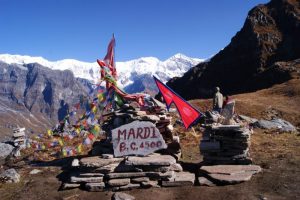
During spring, Everest region treks offer you clear views of majestic mountains including Everest. Tibetan prayer flags fluttering at Kalapatthar with bright colors add amazing decoration to the view. The days of spring are peaceful and bright whereas the nights are full of stars, sparkling brightly. Most treks including Annapurna, Langtang, Everest, Mardi Himal and Kanchenjunga region are favorable during spring.

Autumn Trekking in Nepal

The Autumn season starts in September and ends in November. This is the time when almost all treks are accessible. The rain is not that heavy and the ground easily absorbs the water liberating a smell of fresh soil that gives extra freshness.

The trek routes around Everest and Annapurna region are especially crowded during this time of the year as this is the peak trekking season in Nepal. The weather is perfect for walking even in higher altitude areas with warm days and cold nights.

Autumn brings extra joy and excitement with the two biggest festivals in Nepal also falling in the months of September, October and November. Dashain and Tihar are widely regarded as the biggest Hindu festivals in Nepal. Many chose to visit Nepal during these festivals to get a glimpse of these festivals. It is a good time to trek and also explore the traditional and cultural insights of Nepal during Autumn.

Winter Trekking in Nepal

Winter lasts from December to February in Nepal. The mountainous area is covered with snow and is too cold to trek. Some of the trekking areas in Nepal are not accessible during winter due to the chances of snowstorms and excess snow on the trekking trails. The trekking trails are life-threatening during winter at high altitudes.

Upper Mustang, Upper Dolpo, Humla Limi Village and Rara Lake treks are accessible during the winter months. There’s less snowfall on these trekking trails cutting the risk of a snowstorm during winter.

Trekking at high altitudes is risky during winter so it’s absolutely safe to go for short treks. Short treks like Ghorepani – Poonhill, Kalinchowk, Everest View, Balthali Village, Helambu, Kathmandu Valley and Dhampus – Sarangkot treks are accessible during winter.

Now that you know the best time for different treks in Nepal, you can plan a trek that meets your trekking needs and demands. Every season has its own importance in trekking and you can enjoy trekking around all the seasons. We should be aware of the season, gather info about the trek and plan accordingly, before heading for the trip.

What season are you planning to trek in Nepal? Share your plans below or inquire with us so that we can help you plan an awesome trip.

Top 12 Best Trek in Nepal

Top 12 Best Trek in Nepal If you are looking to trek in Nepal and are confused about which trek might be the best fit for you, you’ve come to the right place. This blog will help you know more about the famous treks in Nepal and help you to choose the best fit for you. With plenty of trekking options to choose from, Nepal has a lot to offer. Let’s dive straight into the best treks in Nepal.

Top 12 Best Trek in Nepal  Everest Base Camp (EBC) Trek has been one of the greatest treks in the world for many years now. The trek to the base camp of the world’s highest does not need an introduction. You can experience the pristine expanse of the natural wonders with this trek. EBC Trek attracts thousands of travelers every year.

The journey to the foot of the world’s tallest mountain begins with a 40 minutes flight from Kathmandu to Lukla.  After that, you trek and it takes around 7-8 days to reach the Everest Base Camp depending on your itinerary. The trek is normally a 12-15 day trek. You will experience the heart-warming Sherpa culture while you pass through the villages of Solukhumbu Everest.

The steep hiking trail to the base camp encompasses Buddhist monasteries, the Dudh Koshi River, a dense forest with distinct vegetation with mesmerizing views of the mountains which adds enthusiasm to your will.

Trek Difficulty

The trekking difficulty of Everest Base Camp Trek is moderate meaning trekkers with average fitness can complete this trek. If you can hike through hills and mountains for a few days, you can complete this trek without much difficulty.

Recommended

  • The trek is recommended during March, April, May, September, October and November.
  • If you have less time to go for Everest Base Camp Trek, taking a helicopter to Kalapatthar or Tengboche is recommended.

Not Recommended

  • EBC trek is not recommended without experienced guides.
  • The trek is not recommended during rainfall and abnormal weather.
  • The trek is not recommended for people suffering from Asthma.

Read our Everest Region Trek Blogs for more information.

Annapurna Base Camp Trek: 

Top 12 Best Trek in Nepal list of best treks in Nepal can not be complete without this, Annapurna Base Camp Trek (also known as Annapurna Sanctuary Trek or ABC Trek), starting from Nayapul or Ghandruk village. Ghandruk and Nayapul can be reached from Pokhara in less than a day.

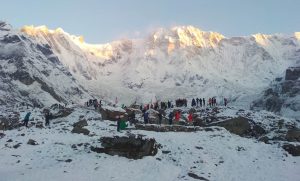
It is normally a 10-13 day trek but it can also be customized according to your needs. Annapurna Base Camp Trek has trails covered with greenery and forest. The dense forests are filled with beautiful rhododendrons and bamboo that will make your journey enjoyable. ABC Trek is full of thrill and adventures but is still suitable for first-timers. This adventurous trekking trail is quite popular for the mesmerizing views it has to offer. Along with the Annapurna range, you will get to observe a range of magnificent high peaks such as Machhapuchhre, Langtang, Manaslu and even more. Read our Annapurna Base Camp Trek Blog for more insights on the trek.

During the trip, you can also explore the Gurung village and experience the wonderful culture and the hospitality of the local people. A hot spring bath is also a major attraction of the Annapurna Sanctuary Trek. Walking through dense forest with rich flora and fauna and the deepest gorge of Kali Gandaki are other major highlights of the Annapurna Sanctuary Trek.Annapurna Base Camp

Trek Difficulty

With an elevation of only about 4,130m, the Annapurna Base Camp trek is considered to be a lower-altitude trek. So, there is less chance of altitude sickness and fatigue problems.

Recommended

  • The trek is recommended for trekkers with an average and good level of physical fitness.

Not Recommended

  • The Annapurna Base Camp trek is not recommended without a professional guide.
  • Not recommended during winter.
  • Luggage not to exceed 15 kgs weight.

Read more about the trek on our Annapurna Base Camp Trek Blogs.

Annapurna Circuit Trek:

Annapurna Base Camp

Top 12 Best Trek in Nepal If the spellbinding view of the massive Annapurna range is what you seek, then Annapurna Circuit Trek is the right choice for you. Regarded as the most dangerous mountain with an extreme level of difficulty to climb, Annapurna massif is particularly a set of thirteen peaks among which six prominent summits are Annapurna I, Annapurna II, Annapurna III, Annapurna IV, Gangapurna, and Annapurna South.

Annapurna Circuit Trek is famous among trekkers due to its asymmetrical trails. It is the oldest trekking trail which was used in the past as a trade route by Nepalese and Tibetans. The Annapurna Circuit Trekking Trail, encircling the Annapurna massif, starts from Bhulbhule and finally ends at Thorung La pass. If you are on a long vacation then trekking along Annapurna Circuit Trail is recommended for you as it is a 15-day long trek and can be extended up to 20 days or even more.

The trails encompass some beautiful places in Nepal like Manang, Mustang, and Jomsom. The trek provides a panoramic view of some of the highest peaks of Nepal such as the massive Annapurna mountain range, Dhaulagiri Manaslu, Machhapuchhre, Himchuli, Lamjung, and Tukuche peaks. The fertile land of the Annapurna region supports various vegetation so you’ll also get a chance to explore the dense forest and distinct flora and fauna.

Annapurna Round Trek takes you around the thick settlement of the Gurung and Thakali people and offers you to witness the traditional Gurung and Thakali culture. You will get a chance to experience the gift of nature, explore the region and manifest the exotic view of the Himalayas ranges which is attainable from nowhere else in the mountain.

Trek Difficulty

Annapurna Circuit Trek is a comparatively difficult trek. It is a long trek requiring a good level of physical fitness. Endurance is key for this trek. As the trek goes through Thorung La Pass, there are chances of altitude sickness.

Recommended

  • Recommended trekking months are March to May (Spring) and September to November (Autumn).
  • Carrying water to keep yourself hydrated is recommended.

Not Recommended

  • Luggage weight exceeding 15 kg is not recommended.
  • Trekking without a guide is not recommended.

Makalu Base Camp Trek:

Makalu Base Camp

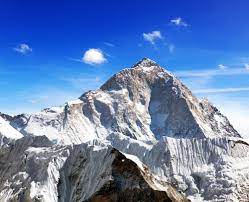
Top 12 Best Trek in Nepal Makalu Base Camp Trek is a real challenge for adventure lovers. With extensively difficult trails, this trek is not permitted for less than two trekkers and without an expert guide. Located in the Eastern part of Nepal, Makalu Base Camp Trekking has the highest elevation of 5,250m.

If you have tried other easy and medium-level treks, and are looking to challenge yourself with difficult and off-beaten treks in Nepal, then Makalu Base Camp Trek is for you. This trek is adventurous and full of wilderness and the trek will test your strength, endurance and also your love for adventure.

Trek Difficulty

The Makalu base camp trek is not for the faint-hearted. As I have already mentioned, it will test your strength and endurance. The trek requires a nice level of physical fitness.

Recommended

  • The trek is recommended from March-May and September-November.
  • Luggage should not exceed 15kg weight

Not Recommended

  • It is not recommended for people with an average level of fitness.
  • The altitude is really high so consult a doctor before going for it.
  • Not recommended during winter
  • Not recommended for first-timers

Ghorepani Poon Hill Trek:

Top 12 Best Trek in Nepal  Ghorepani Poon Hill Trek can be categorized as a short and easy trek in Nepal. Gurung villages, thick rhododendron forests, panoramic mountain views, and breathtaking sunrise views from the back of the Annapurna mountain range are the main attractions of this trek.

Trek Difficulty

Trekkers with average fitness can complete this trek and enjoy nature. With a maximum height of only 3210m, this trek avoids altitude sickness and fatigue. The trek is comparatively cheap but requires ACAP and TIMS permits.

Recommended

  • Highly recommended for first-timers and trekkers with average fitness.
  • The trek is highly recommended if you want to explore Annapurna in a short period of time.

Not Recommended

  • Not recommended for trekkers who want extreme adventures in Nepal.

Manaslu Circuit Trek:

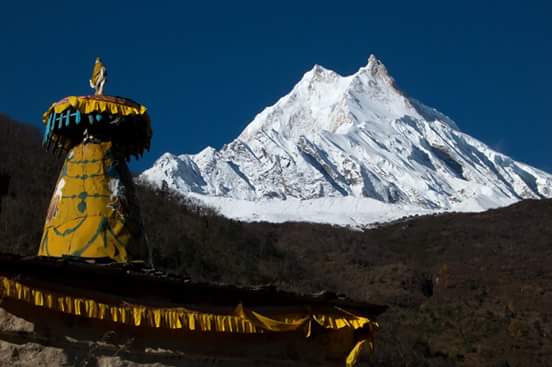
Top 12 Best Treks in Nepal Standing high as the world’s eighth-highest mountain, the Manaslu mountain view from the vicinity is a treat to the eyes. Manaslu Circuit Trek is an offbeat trek in remote areas of Nepal. So, you can expect rough and challenging trails for trekking. You will come across some diverse cultures, ethnic groups and topography which makes the trek more interesting and adventurous as well. Manaslu Circuit Trek is normally a 14 days long trek that ends at Larkya La Pass. The trek has the highest elevation of 5,160m and it also demands a high level of physical fitness.

Trek Difficulty

The trek is a moderate trek but is more difficult than the Annapurna Base Camp Trek. Larkya la Pass is also on the trek route, so there are chances of altitude sickness.

Recommended

  • For those who want to get close to nature
  • For those who want to try challenging trekking in Nepal
  • To trek around March-May and October-November

Not Recommended

  • The trek requires 5-10 hours of walking on different terrains, hills and mountains every day, so it is not recommended for average fitness people.

Langtang Valley Trek:

Langtang Trek

Langtang Valley is a serene valley at the border of Tibet and Nepal. Enriched with distinct trees, species, and vegetation, Langtang is a beautiful valley blessed with Mother Nature. This rural landscape in the Langtang region of Nepal has numerous tea houses for accommodation. Exploring the biodiversity and Buddhist culture during the Langtang Valley trek is amusing for travellers.

Langtang trek starts from Syabru Besi. Trekking up to the height of 5,000m, we will reach Tserko-Ri. From Tserko-Ri, you will witness the majestic 360-degree view of the entire Langtang Valley.  The Langtang trek encompasses the holy Gosainkunda and Kyanjin Gompa. It is a 10 days long trek which is not so difficult for determined and adventure trekkers.

Trek Difficulty

Trekkers with average fitness can go for this trek and enjoy the picturesque view of Langtang Himal.

Recommended

  • During March-May and October-November

Not Recommended

  • For people with low physical fitness.

Kanchenjunga Trek

Kanchenjunga Trek

Regarded as the third highest mountain in the world, Kanchenjunga is a synonym for danger because of its path to reach its top. No one has ever been able to climb this incredible yet dangerous mountain to date. The beauty of Kanchenjunga is no less than a fairy tale, and that may be the reason it attracts trekkers to its difficult trails. The trek is one of the best treks in Nepal among the less ventured areas.

It is a 25-day long trek and requires KCA and RAP permits with other restricted permits. Thus, the Kanchenjunga Trekking Package cost is slightly high compared to other trekking in Nepal.

Trek Difficulty

The Kanchenjunga trek is fairly difficult and is not for people with low levels of physical fitness. The trek takes you through difficult trails and is also remote.

Recommended

  • For people with an extreme level of fitness
  • During March-May and October-November

Not Recommended

  • The trek is not recommended without a guide.
  • Luggage weight of more than 15 kg is not recommended.

Mardi Himal Trekking:

Mardi Himal Trekking


The trails of the Mardi Himal Trek in the Annapurna region make this trek one of the less challenging treks in Nepal. It is a short trek with many aspects of Nepal to discover. The Annapurna trekking trail goes through a dense rhododendron forest that leads to the base of the Mardi Himal (4,500m).

The high mountains like Mardi Himal, Annapurna, Machhapuchhre, and Hiuchuli are clearly visible during Mardi Himal Trek. The winding Annapurna Trails are rough so you can expect a challenge as well as an adventure. Enjoy the solitude and explore the middle part of Nepal with the background of some majestic mountains and pristine nature. At Heaven Nepal Adventure, Mardi Himal Trek is an 8 days package.

Trek Difficulty

Trekkers with an average level of fitness can complete this trek without much tiredness and fatigue. This trek doesn’t require any permit and is accessible in winter, unlike some other treks in Nepal.

Recommended

  • For first-timers, Mardi Himal Trekking is well challenging and adventurous.
  • From March to May, and September to November.

Not Recommended

  • The trek is not recommended for experienced trekkers seeking thrills and adventure.

Gokyo Valley Trek:

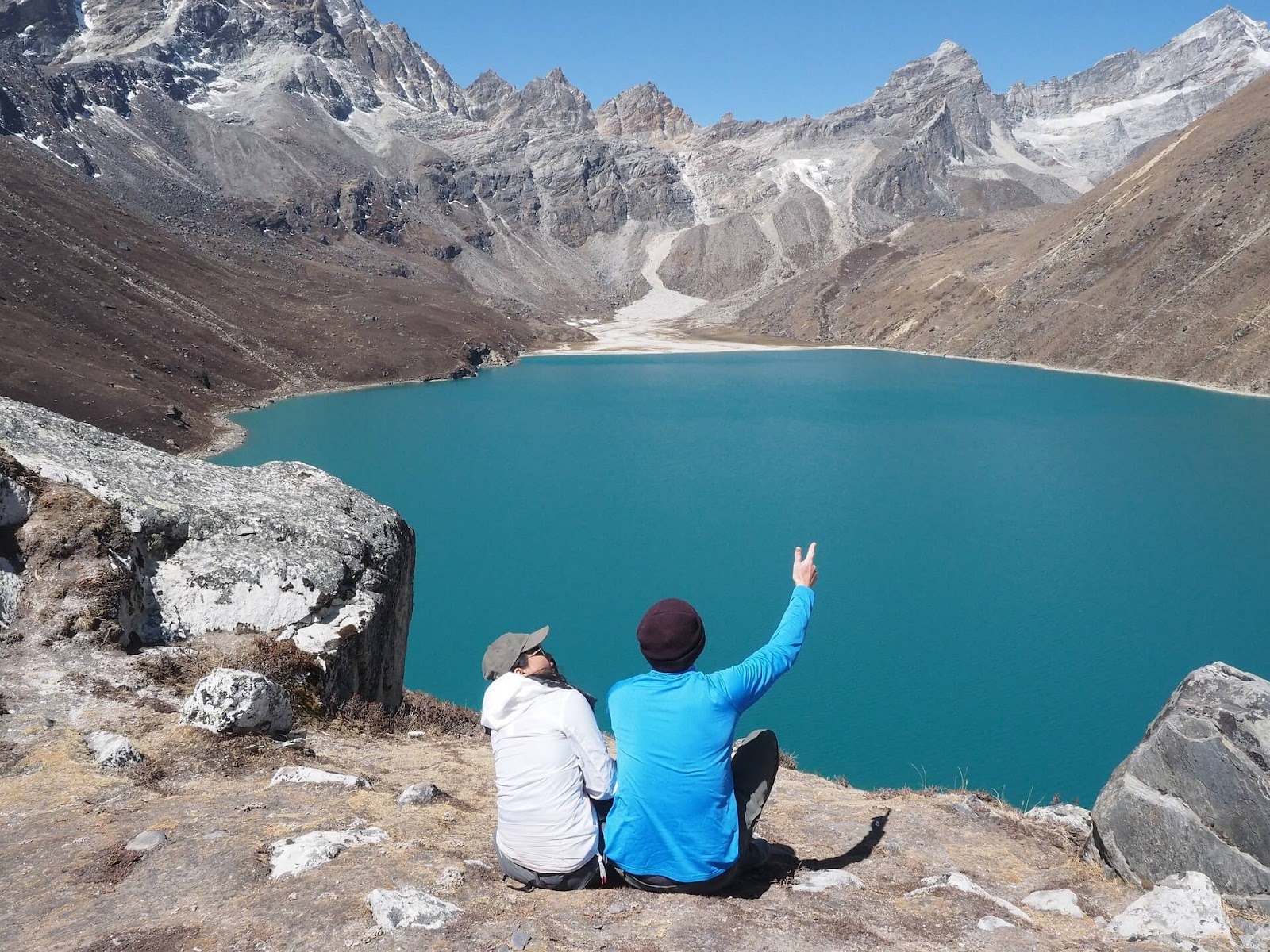
Gokyo is a small village located in the Eastern part of Nepal at an elevation of 4,750m. The trek is considered an alternative trek to the Everest Base Camp Trek because the trekking path of the Gokyo Valley Trek is less rough and challenging. The trek still offers a magnificent view of the Mount Everest range along with the Longpongo Lake, Gokyo Lake, Taboche Tsho Lake, Cho Oyu Himal, and Ngozumpa Glacier. It is normally a 15-day trek.

Trek Difficulty

Gokyo Valley Trek is a moderate trek and can be accomplished by trekkers with an average level of physical fitness.

Recommended

  • The trek is recommended from March to May and September to November.

Not Recommended

  • The trek is not recommended during extreme winters.

Upper Mustang Trek:

Another long and venturesome trek in Nepal is at the secluded northern part of the Mustang. The isolated yet captivating barren land of Upper Mustang can be explored with Upper Mustang Trek. The trek takes you to an elevation of 3,800m and with most of its remote trails, is considered an off-beaten trek.

The exceptional geography of Upper Mustang is dry and deserted yet surrounded by majestic mountains giving a spectacular view to cherish. The temples, monasteries, Tibetan prayer flags, tea houses, and huge stones with bizarre structures add glamour to the beauty of this Upper Mustang Trek. With not much human population, Tibetan culture has been preserved for centuries in the Upper Mustang areas.

A 15-day long trip to the Upper Mustang Trek from Heaven Nepal Adventure starts from Pokhara or Kagbeni and it requires special permits too. The trek is accessible during winter but the trek is really harsh so you must be physically and mentally prepared.

Trek Difficulty

Top 12 Trek in Nepal one of the mustang trek does not take you to very high-altitude areas but requires good physical fitness.

Recommended

  • From March to May, September to November
  • To proceed with two or more trekkers along with a professional guide

Not Recommended

  • For people with an average level of fitness.
  • For people with Asthma problems.

Upper Dolpo Trek

upper dolpo

Top 12 Best Trek in Nepal geographically rich Upper Dolpo is an isolated trekking destination due to its remoteness and challenging trekking trails. The upper Dolpo trekking trail stretches to the apex of Magdalena Pass, Shey La Pass, and Jeng La Pass.

This elongated 25 days of trekking is challenging yet the view of Kanjirowa Mountain and the mesmerizing Phoksundo Lake captivates the trekkers which makes them forget the struggle and tiredness.

Upper Dolpo Trek is a great way to explore the typical Tibetan culture and monasteries. The beauty of Dolpo was manifested in the 1999 Academy Award-winning movie Himalaya and it has helped this remote Upper Dolpo Trekking attract some trekkers. The trekkers should acquire some special permits. If you are looking for less ventured trekking areas, this is one of the best treks in Nepal for you.

Trek Difficulty

Upper Dolpo trek requires an average level of fitness as the trekking trails are not that unusual and rocky.

Recommended

  • The trek is recommended from March to May and September to November
  • It is recommended to proceed with two or more trekkers along with a professional guide

Not Recommended

  • It is not recommended for people with altitude sickness.

So, that’s the list of best treks in Nepal and until now, you might have made up your mind on which trek is the best for you. These treks are only some of the options and you might also have other trekking ideas. Inquire us if you want any information about trekking in Nepal.

Everest Base Camp Trek Clothes to pack for the trek?

Everest Base Camp Trek Clothes to pack for the trek? if you are willing to trek the Mount Everest base camp, then you must have questions about clothes. People misunderstand that it is usually too cold in the Everest Region, but that’s not totally true. The average temperature throughout the year is between 11 degrees and -8 degrees. But the changes in temperature are dramatic on days and nights. The other thing that may be bothering me is the strong wind. Undoubtedly, there are things you should consider packing for Everest Base Camp Trek.

The best time to trek is in the spring and autumn seasons. But, packing matters as much as seasons and you should be careful about Everest Base Camp Packing List. This blog is a guide for Everest Base Camp Trek Clothes or What clothes to pack for the EBC Trek?

When packing clothes for the Everest Base Camp Trek consider these along with the weather. Rain and snow are common if you are planning to trek to EBC in summer and winter.

Layering

Layering is basically a key thing when it comes to clothing for the trek. Trekking involves lots of sweating so the layering should be in such a way that it lets the moisture pass through the layers and not trap it in. You should wear something that keeps you dry and also make you feel comfortable walking strenuous paths. The clothes should be arranged in three layering’s (base layer, middle, and outer layer).

Base Layer

The base layer is in direct contact with your skin, so the layer must be of a material that doesn’t absorb the wetness. Below are the base layers you need to pack.

Hiking Shirt

The t-shirt should not be of cotton, as cotton tends to absorb sweat a lot. The material should have wicking which will let the moisture away from the cloth. Consider packing 4 or 5 of these breathable t-shirts.

Leggings

The leggings should lose fit and be comfortable for you. Merino wool is highly recommended and favored by most trekkers. Bringing 2 or 3 may be enough for the trek.

Underwear

Trekking can last 4 or 7 hours a day. And sweating is common for the trek so, packing good quality breathable underwear is necessary. Taking 2 or 3 of these is recommended for the EBC trek.

Woollen socks

Happy feet are necessary for the trek. So, to properly care for your feet, good pairs of socks are necessary. The socks that dry quickly, are comfortable to wear and protect your feet from blisters.

Middle layer

Also called the insulating layer, the layer keeps your body heat from retaining.

Fleece clothes for the torso and legs

For the middle layer, fleece or middle fleece clothes are the best. They are lightweight and comfortable to wear. It also provides some warmth and is breathable. A good brand named The North Face is loved by most trekkers.

Outer Layer

The outer layer cloth must be wind and waterproof as the weather is unpredictable in the Everest Region.

Rain Jackets

Wind and waterproof jackets are a must for the trek. The layer is needed when you reach higher altitudes where the weather changes time and again. To beat the cold and the wind, you need to have good quality jackets. You should not compromise the quality in terms of price and get good ones.

Waterproof trekking pants

Fast-drying hiking pants can be beneficial for the trek. The warmer pants are also available if you trek on the offseason. But one thing is comfort, so you should wisely select the pants for the trek.

Head Wear

Protecting your head and keeping it warm is also necessary. For the headwear the following things are necessary.

Hat

Sun can be harsh during trekking, so for minimum exposure to the sun, bring in a hat or two. You should bring a nice comfortable and lightweight trekking hat.

Beanie

Beanie is for the cold nights, as it will easily cover up your ears and head, and you will have an easy time against the wind and the cold.

Neck Gaiter or Scarfs

It is an easy piece of clothing, which can be used for covering up your neck, mouth, and also nose. It will help you against the freezing wind which is a hurdle while trekking.

Footwear

It is one of the most important things for making Everest Base Camp Trek easier and more enjoyable. Having a good pair of footwear makes walks less strenuous and more enjoyable.

Hiking Boots

Your shoes define you. Getting a nice comfortable fit boot is a must-have for trekking. A good quality boot that fits you is a wise choice. As for the snowy paths, getting waterproof ones will help you keep your socks dry which is an important factor.

Slippers

At night, you might want some slippers for yourself in the teahouses. So, do bring a pair of slippers for the trek.

Gaiters

Gaiters are for the legs. It is a waterproof material cloth that will help prevent water, rocks, and mud from getting into your boots. Consider the season before packing and preparing for Everest Base Camp Trek. You might want to pack more clothes in winter than you would in spring. If you have any questions about the EBC trek, then do leave a message down below. We’d be more than happy to help you know more about the trek.

Everest Base Camp Packing List

Everest Base Camp Packing List have trouble finding the list of essentials for the Everest Base Camp Trek? Don’t worry, you’ve come to the right place. In this blog, we will discuss and list the complete Everest base camp packing list based on feedback and the personal experiences of 100+ trekkers. Let’s begin right away!

“What to pack for Everest Base Camp Trek? ” can be really confusing if you are not an experienced trekker. The general rule is to pack only the essentials and try to make the backpack as small as it can be. Even if you have brought a lot of stuff from back home, you can leave them in your hotel in Kathmandu and receive them after the trek. Below we discuss a list of things you will need for the trek.

Backpack:
A 60-litre comfortable backpack is recommended for the EBC trek. Check the backpack, read reviews and make sure it is comfortable to carry while trekking before buying a backpack. A Duffel bag is also one of the options.

Footwear and socks:
Footwear is one of the things you can’t afford to choose wrong while trekking. Make sure footwear is comfortable and does not cause sore feet. To ensure comfort and grip, hiking shoes are highly recommended (especially for those with high ankles). Lightweight, waterproof and fitting hiking boots are perfect for the EBC trek. Also, for your stay in a hotel, you may want flip-flops or other light footwear.

You can also buy spikes for hiking boots that will provide extra grip on slippery surfaces. Gaiters are also good if you are planning to trek during the monsoon.

We recommend you buy comfortable and warm but not too thick socks. 5-6 pairs for the trek is a good idea as you won’t be able to wash them while on the trek. Socks can be easily bought in Thamel.

Clothing:
You are going to feel hot as well as cold during your trek. It is a good idea to wear layered clothing while trekking to places like EBC. Most experienced trekkers wear and recommend wearing 2-3 layers of clothes while trekking to Everest base camp. The 3 layers are: the base layer for ticking away moisture and sweat, the middle layer to keep you warm and the outer layer is the shell which is usually windproof or waterproof. The base layer should not absorb wetness so it should be of synthetic material and not cotton. So, what clothes can be used as these layers?

Base: Breathable sports underwear, dry-fit t-shirts, hiking shirts, light thermals and socks.

Middle: Fleece jackets and sweaters.

Outer: Raincoats, Rainproof Jackets/Trousers, Windproof Jackets/Trousers, Gloves.

Jackets:
Down jackets will ensure you are warm and safe in the extreme cold weather on the trek. These jackets are known to keep you warm even at -10 or -20 degrees celsius. It is recommended that you buy them in your country as buying down jackets (original) in Kathmandu can be costlier. Down jackets are available for rent in Thamel at a cheap price.

Rainproof and windproof jackets are also necessary to tackle uncertain weather conditions in the mountains. They can be easily bought in Thamel for around $40 or more. You can also carry a rainproof cover for your stuff.

Trousers:
You will need 2-3 pairs of trousers for your trek. One hiking trouser (windproof/waterproof) to wear during the trek, one normal for your stay in hotels and one extra in case of emergencies. Sometimes during hot days, half pants will also work. The trousers are also available to buy in Thamel.

Thermals:
The higher altitude areas are particularly cold and for that, you will need 1-2 pairs of inner thermals. Light thermals are better than thick or woolen ones as you can be sweaty during the trek.

T-shirts:
Full-sleeve, light and dry-fit T-shirts will be perfect for the EBC trek. You may need 4-5 t-shirts (both half and full sleeve) for the trek.

Sunglasses, gloves and hats
Polarized sunglasses will protect your eyes from dust and UV rays. Beware of the fake ones if you are planning to buy them in Kathmandu. Normal waterproof and windproof gloves are good for the EBC trek. A hat is a good idea but not a compulsion.

Water Bottle and Purifier:
Carrying a water bottle is a must. It will help you reduce costs as 1 liter of water may cost around $3 on the EBC trek route. Also, carry a water purifier as the water available on the trek route may not always be safe to drink. Water purifiers are usually drops or tablets. It is better to buy a water bottle suitable for both cold and hot water.

Walking stick:
Walking sticks can help you a lot especially if you are a beginner. The stick is also known as the Trekking Pole will help to support your knees during the trek. This can be bought in Thamel for around $10.

EBC Trek Map:
Maps will be of great use for planning as well as trekking to those who are trekking without agency. The maps of Everest Base Camp Trek can be bought in Kathmandu or Lukla or Namche Bazaar.

Medical Kit:
It is best to carry a medical kit with some basic medicine and health care items. Your medical kit should basically include these items: paracetamol, painkillers, digestive tablets, bandages, hand plants, antiseptic, Diamox, diarrhoea tablets, rehydration powder and lip balm.

If you have any prescription medicines, do not forget to pack them too.

Hand Sanitizer and Toiletries:
Hand sanitizer is another must-have and it comes in handy every now and then. Toiletries are better bought in your countries as your options may be limited in Nepal.

Sleeping bag:
Sleeping bags are found in teahouses and are also available for hire in Kathmandu. However, carrying one during peak seasons is always a good idea. Sometimes, the blankets may not be enough for you and in this case, a sleeping bag definitely helps.

Trek Sleeping Bag:
The Complete Everest Base Camp Packing List
In case you don’t miss anything else, here’s the full list:

Documents:
Passport
Travel Insurance
Air tickets
Few passport-sized photos
Map
Clothing and Accessories
Sunglasses
Hat
Scarf
Masks
Neck gaiter
Lightweight thermal gloves
Lightweight towel
Down Jacket
Windproof and waterproof jacket
Windproof and waterproof trousers
Thermals
Sleeping trousers
Shorts
T-Shirts (full/half sleeve)
Underwear’s
Footwear
Socks
Walking shoes or sandals
Hiking shoes
Sleeping bag
Food & water
Snacks ( Crackers, Chips, Biscuits, etc)
Protein bars
Chocolates
Candies
Dry fruits
Your favorite coffee or tea bags
Water bottle
Water purifier
Personal Hygiene and Toiletries
Hand sanitizer
Quick drying towel
Toothbrush
Toothpaste
Multipurpose soap
Deodorant
Nail clipper
Face wash
Body wash
Baby Wipes
Sunscreen with maximum SPF
Moisturizer
Small mirror
Feminine hygiene (Sanitary pads)
Other Essentials
Sleeping bag
Duffel bag
Backpack (45-60 litter)
Swiss knife
Trekking Pole or Stick
Portable charger/power bank
Books
A notebook and a pen are always useful
Binoculars
Alarm clock
Torch/Flashlight/Headlamp
Lighter
Insect repellent
Earplugs
Locks
Sewing kit
Card games (Uno, Skip-Bo)
Board games (Ludo, Chess)
This is a general packing list most people would recommend for Mount Everest Base Camp Trek. Let me know if I missed anything (in the comments section). Also, feel free to inquire us if you have any queries.

Need help planning for EBC Trek? Our blogs How to prepare for Everest Base Camp Trek? or A Complete Trekking guide to Everest Base Camp Trek might help.

How to Prepare for Everest Base Camp Trek?

How to Prepare for Everest Base Camp Trek? Travel always brings exciting memories, helps to discover new things, and meet new people. Everest Base Camp Trek has been one of the greatest letting you explore the scenic, adventure and cultural side of Nepal. ‘How to prepare for Everest Base Camp Trek?’ is a question we hear too often. If you are having a thought of enduring this journey, this How to Prepare for Everest Base Camp Trek blog will help you know more about how and what to plan for the trek.

Try to make your backpack as small as possible

You should not pack too many clothes. Bring only the essential ones which you will need. The trek is going to be tough if you have a chunk of clothes in your backpack. A few pairs of t-shirts, shorts, socks (woolen), and gloves are enough for the trek. If you have a big backpack, you can leave some of your stuff in the hotel in Kathmandu and collect it after returning. If you need other items, take a porter with you to carry your backpack. Doing this ensures you are in good shape throughout the trek.

Don’t think of it as a vacation where you would bring a suitcase with you. It might feel too cold so, bringing down jackets is a good idea. It’s better to pack clothes you would need only for a day. The up-and-down trails will comparatively feel a lot easier if you are carrying a lightweight backpack. Our blog Everest Base Camp Packing List will help you with how and what to pack for the trek.

Bring lightweight footwear

Footwear is crucial for trekking. Bringing lightweight hiking shoes or boots is definitely going to help you a lot. The terrains are tough to walk on, so it’s necessary that you have a comfortable pair of shoes with a good grip. Most people wear hiking boots for trekking, but whatever gives you comfort and has a good grip should do okay. The lightweights are going to bring you many benefits, first, your feet won’t get tired, and second, you will be able to cover much more distance without much energy wasted. Wearing tight and uncomfortable shoes will only add problems during your Everest trek, so make sure to grab some nice shoes.

Don’t bring too many snacks

Snacks are of course necessary for your trek. Bringing some energy bars, and chocolates, but too much is not good. You will find many teahouses along the way, which means you won’t be needing to eat too many snacks. These teahouses have proper meals and food so reducing some grams weight from your backpack would be good. A few packets of nuts and 5/6 energy bars are enough for the trek.

Choose an experienced and licensed guide

If you are booking through a trek operator, then you won’t have any hassle of finding a professional guide. The agency will assign you the best guide they have for the trek. If you are travelling without an agency, you can hire a guide through the agency. The guide is important if you have never been to the Everest Region before. The mountain journey is moderately difficult. However, there will definitely be unexpected scenarios which the guide will be able to handle.

Altitude sickness can happen to anyone, even if one has a perfectly healthy body. The guide will mentor you throughout the journey and also crack a few jokes to keep your spirits going. Nepali guides are humble, friendly, and honest. They will be providing you with an amazing company.

Ensure your trekking agency has  pre-booked your stays

If you wish to travel during the peak seasons i.e. the Spring and Autumn, you definitely should ask your agency to make every arrangement of hotels for the stay. Though there is enough number of proper hotels in every town and village sometimes you might just get unlucky. So, booking beforehand is always a wise decision.

Dingboche, Khumjung, Lobuche, Lukla, and Namche Bazaar all have proper and well-managed tea houses with facilities to some extent. However, you should not expect top-class services and should compromise a little.

Keep yourself updated on the weather

The weather in the mountains is unimaginable. You will find yourself in a situation where the weather changes every minute. If you have a guide with you then, he will surely be well informed and had information about Everest Base Camp Trek weather. You and your guide should keep an eye on the day’s weather forecast and make rational decisions.

The decrease in temperature can sometimes go below -20 degrees. You will need to prepare yourself for tricky Everest Base Camp Trek Weather. Getting some good quality down jackets will do for withstanding the cold weather. And also keep some extra fresh woolen socks in your backpack.

Cardio and Physical Training before the trek

You might have already booked for the Everest Base Camp Trek and waiting for the actual day when you actually step foot on the terrains. However, you should definitely prepare yourself both mentally and physically. If you are an experienced hiker, it will be easier for you. If you are not experienced, you can try a few short hikes before you trek to EBC.

Watch the vlogs, and read articles and reviews of people who have already been to Everest. Knowing your Everest Base Camp Trek itinerary, route and options will certainly help you to plan better. And yes Cardio training definitely helps in making your body prepare for the trek. Stamina and endurance improvement exercises, aerobics, etc can be done on Everest on a scheduled basis as preparation for your trek. Exercises should be followed by a properly balanced diet. It’s all about the nutrition needed for your body. Do not overdo it in the name of the exercise, you can spend 5 or more hours a week into the training time before the journey.

Plan for a few extra days.

If you are looking to trek in a country like Nepal with unpredictable weather at times, you should include a few extra days in your plan. There are chances of flight delays/cancellations and roadblocks too. Planning for an extra few days is a wise idea. You will be on the safe side if the trek gets cancelled or is extended for a day or two due to some unavoidable circumstances.

Be clear on what services are included or excluded from your package.

While you are planning and booking your trekking package in Nepal, ensure that you are clear about what services you are going to get. Most operators will provide you with the list of what is included and excluded on the trek and even if they don’t, ask for it. This will help you to get things sorted.

Carry your necessities.

Do not expect to get a whole lot of things in Nepal. You may have to bring some of the things from your country. It is good to prepare early. If your needs are unique, it’ll be better if you bring those stuff to your country.

Have proper immunization for the trek

It’s better to get immunized against malaria and/or some other diseases with proper doctor consultation. A physical test is also recommended before heading on to the trek. It is better to be cautious about any health hazards one may face during the trekking journey. Immunization against Tetanus, Hepatitis, Malaria, Typhoid, Rabies, etc, is recommended before you head on to the journey.

We are no physical consultants. Please consult a licensed medical person if you need to.

Everest Base Camp Trek Preparations FAQs

Will I be able to do Everest Base Camp Trek?

With proper preparation, everyone can do the trek. If you have previous experience trekking in Nepal, it’ll be easy for you. If you are a beginner, chances are it’ll be difficult for you and you may have to train yourself for physical fitness. You will be walking for around 80 miles for the trek so you will need to be in good condition. Pre-inform the trek operator to match your itinerary with your body and experience. Almost everyone has completed the trek but we can not ignore safety.

How do I prepare myself for Everest Base Camp Trek?

Preparing yourself for Everest Base Camp Trek involves planning both mentally and physically. EBC Trek is not hard but you have to keep up your endurance and stamina to complete the trek without much difficulty. Having prior trekking and hiking experience will help you on this trek.

What type of training plan is needed for Everest Base Camp Trek?

Training can vary as stamina, endurance and physical fitness are all equally necessary for the trek. Anything that helps in those aspects will work including aerobics, cycling, cardio, lifting weights and swimming. If you can, you may also do short hikes for a few days to keep your body in shape.

Do I need prior trekking experience for the Everest Base Camp Trek?

No, you do not need it but having prior experience will certainly help you in Everest Base Camp Trek. Many beginners have completed this trek without much difficulty. If you are experienced walking in the hills and mountains (3000m or higher altitudes on uneven terrains) for 5-6 hours a day with a backpack, you should have no problem reaching the Everest Base Camp.

Why should I care about acclimatizing on EBC Trek?

Acclimatizing is done to help your body adapt to higher altitude areas. If the altitude changes within a day in the trek is considerably high, your body might have problems adapting to less oxygen in the air. It is recommended that you do not cross more than 600 meters in a single day. The itinerary of your trek should be designed to not gain more than 600m elevations and acclimatize when necessary.

What clothing is recommended for Everest Base Camp Trek?

We usually recommend 3 layers of clothing. The base layer of sweat-proof clothes, the middle layer to keep yourself warm (woollen jackets, trousers, sweaters, hoodies) and the outer layer to protect yourself from rain, snow and cold (waterproof/windproof trousers and jackets).  Most people use layered clothing. It’s easy to add/remove extra layers if the weather is cold/warm.

What food should I bring?

You will get plenty of places in the trekking route so only bring those absolutely necessary. Chocolates, energy bars and dry fruits are good as they work as energizers and are good nutrient providers. You can also bring those you’d love to eat while you are on the trek.

What type of terrain will I be walking on?

You will be walking on all kinds of terrains. The Everest Base Camp Trekking route goes through hills, villages, forests, streams, suspension bridges and mountains.

Do I need hiking boots for Everest Base Camp Trek?

Yes, hiking boots are a necessity. Also, if possible wear them before to check if they are good to go as you will be wearing them for around 10 days in the mountains. And, believe me! The last thing you would want is to get your footwear uncomfortable or slippery. Good grips are necessary especially in winter and summer.

How fast am I supposed to walk?

Pace matters a lot while you are trekking to Everest base camp. You are required to walk neither too slow nor too fast during the trek. The quote ‘Slow and steady wins the race is absolutely applicable here. Avoid walking alone and mostly, you will walk with your group/guide/porter as it is a requirement to be too slow.

Summary: How to Prepare for Everest Base Camp Trek?

  • Try to make your backpack as small as possible
  • Bring lightweight footwear
  • Don’t bring too many snacks
  • Choose an experienced and licensed guide
  • Ensure your trekking agency has insured your trekking agency has  pre-booked your stays
  • Keep yourself updated on the weather
  • Plan for a few extra days.
  • Be clear on what services are included or excluded from your package.
  • Carry your necessities.
  • Cardio and Physical Training before the Trek
  • Have proper immunization for the trek

Everest Base Camp Trek is one of the best heart-throbbing adventures of all time but trekking to the base camp of the highest mountain requires proper plans and preparations. People might say not much preparation and physical training are necessary or otherwise but you are the one who decides if you need those. Some people go to the gym and are athletes, so they would not require as much training. Yes, some people did not think training is necessary but not all people are the same. Also, training is good to keep yourself on the safe side.

We hope this article helped you with How to prepare for Everest Base Camp Trek. Also, read our even Rapid Everest Base Camp Trek Complete Guide. Share if you think it’s helpful and inquire us if you have any questions.

Everest Base Camp Trek

Everest Base Camp Trek is one of the most important trekking beats in the world, attracting gambol and nature lovers from all sides of the world. It takes everyone on a natural scamper as it provides a breathtaking sight of lush flora and fauna and snow-capped mountains. Climbing Mount Everest Base Camp is a step in the right in climbing.

Route:

The trek as a general rule starts and ends in Lukla, a town in the Khumbu region of Nepal. The trek, as a rule, starts and ends in Lukla, a percent in the Khumbu in the ballpark of Nepal. You can reach Lukla by a short flight from Kathmandu. This section, situated at 8,016 meters (26,289 feet) between Lhotse and Everest, is notorious for its treacherous weather conditions.

The trek makes one way through various. On some of the world’s giant and most well-liked mountains on the Everest Base Camp trek, trekkers also see snow slides, greenwood, lakes, the inland sea, and wild animals.

Duration:

The standard  time for the Everest Base Camp trek is 12 to 14 days.

Wisely pack:

Pack lightweight but vitally important articles for the trek. Some vital items include a good pair of trekking boots, well-furnished clothing in layers, a warm sleeping bag, a down jacket, a waterproof jacket, gloves, a water bottle, and basic toiletries.

Currency:

Major currencies AUD, EUR, GBP, and USD are used to gain a visa. There are ATMs in  Kathmandu and Pokhara, and credit cards are taken in bounded shops and many restaurants in Kathmandu and Pokhara. Outside the cities, credit and debit cards are unplayable to use to pay for the deficiency of card-reading machines. It is looking with favor on changing currency to Nepali rupees (Rs.) in Kathmandu or before, as it is accepted everywhere in Nepal.

Highlights:

From Everest base camp, we were given a bounty of spectacular views of Mt. Everest, Lhotse, Nuptse, and Pumori, as well as the imposing Khumbu glacier and icefalls and snow slipping beyond our eyes. It is the major highlight of the Everest Base Camp Trek.

The lofty point you’ll stretch out is Kala Patthar, at a step up of 5545m or 18,192 f. Familiarization days are set up in the daybook to help adventurers adjust to the high elevation and lessen the possibility of altitude ailment.

Permits:

The government of Nepal has made it essential for all adventurers to come with the essential entry grant, comprehend the Sagarmatha National Park permit and TIMS (Trekkers’ Information Management System) card. These grants are of the whopping great importance to ensure the safety and safeguarding of adventure, as well as to take awareness of the habitat and cultural heritage of the region.

Best time to visit:

The best time to visit Everest Base Camp is either side of the late May to mid-Sep monsoon season. Late September–November and February–May are the most important trekking months, with well-constructed conditions, good clarity, and temperatures at Base Camp rising to about -6°C. These seasons don’t have the jumbo snow dung heap of winter, nor do they have the monsoonal rains of summer.

Physical Fitness:

While the trek doesn’t pertain to technical climbing or being pro-level athlete-shaped A good level of physical fitness and staying power is necessary due to the stand against the countryside and altitude. Step by step, increase the duration and degree of your journey on foot to build your staying power over time.

Guided:

Consider taking on a guide and/or stretcher bearer for support and to enhance the overall experience. Many guided treks provide support, local expertise, and assistance with direction. It is important to gain guided treks because Nepal’s government has implemented new regulations that require all trekkers to take on a licensed guide and porter for their journey. This change aims to increase the safety of adventure and ensure responsible tourism, as the guides are trained to pick up unforeseen circumstances and are well-versed in the local terrain and culture.

Conclusion:

The sight from Everest Base Camp is not only a get-together for the eyes; it’s an encouragement for the soul. Yes, it is one of the many reasons to go on a trek to Everest Base Camp. You’re standing in a frame of mind that very few have the benefit of experiencing. For some, a base camp is a form of underworld, a temporary port where one must spend four or five weeks giving and taking for the chance to climb Everest. For others, it’s the concluding summer camp, a place and community far apart from any other on Earth. Either way, for those who want to move up to the highest point on the planet, these are the two starting points.

Religious Tour in Nepal

Religious Tour in Nepal is a country where a variety of ethnic groups have their own spiritual belief. The country is home to a different culture, language, customs, and religious beliefs. The majority of the people living here follow Hinduism and Buddhism. However, other religions like Christianity, Islam, Jainism, and Shamanism also have a significant number of followers as well.

As such, Nepal is an exemplary nation where people from all different religions live together with great harmony and cooperation. Hence, the Pilgrimage tour in Nepal is a base for all religious devotees around the world. So, if you are excited about exploring pilgrimage destinations with religious ideas, or even adventurous purposes you are warmly welcome to Nepal.

Starting from the capital- Kathmandu, you can find a remarkable coming together of Hinduism and Buddhism. The valley is home to seven UNESCO world heritage sites; all of which display a certain degree of religious influence.

Pashupatinath is the sacred Hindu temple of Lord Shiva and is located at the bank of the Bagmati River. The nearby Guheshwori Temple and Sleshmantak forest are also of significant religious importance.

Likewise, Swayambhunath and Boudhanath are Buddhist shrines equally revered by Hindus as well. The durbar squares in Kathmandu, Bhaktapur, and Patan are also famed for housing ancient courtyards and temples.

Heading away from the capital, Lumbini- the birthplace of Lord Buddha is another must-visit religious site in Nepal. Located in Kapilvastu, this UNESCO world heritage site is arguably one of the biggest Buddhist pilgrimage sites. As such, Lumbini boasts of famous monuments like the Mayadevi Temple, Ashoka Pillar, the Eternal Flame, the Bodhi Tree, and numerous monasteries.

Likewise, if you are interested in adventurous trips and at the same time are looking to add up some cultural and religious aspects to the trip then destinations like Gosainkunda, Muktinath Temple, and Tengboche would be a perfect fit. The Mani Rimdu Festival in Tengboche and Tiji Festival in Lo Manthang are also great ways to enjoy authentic Sherpa and Tibetan festive rituals respectively.

Nepal is also the Gateway to Kailash Mansarovar, the mythical abode of Lord Shiva. Devotees from different parts of Nepal and India gather at this temple during special festivals. However, these locations are situated in the Himalayan region.

So having slight experience of hiking and trekking is a must. Other than the above-mentioned locations there are many other religious destinations in Nepal. A few of them include Pathibhara, Manakamana, Gorkha, Halesi Mahadev, Janakpur, Tansen, Swargadwari, Barah Chhetri, Khaptad Ashram, etc.

Hence, Nepal warmly welcomes visitors from all around the world to enjoy the true beauty of its culture and religious variance. With our experienced members and a team of experts, we have created special itineraries for these trips. At Heaven Nepal, we value your money and care for it; so, we will try our best to provide the finest services to our clients.

The Tibetean Route Manaslu Nepal

The Tibetean Route Manaslu Nepal In this text is Tibetan meant ethnic Tibetan in the Nepal.

No altitude but attitude. (Manaslu 8163 m. alt.)

Foreword

The 2015 earthquake in Nepal impressed me most. Not only Kathmandu was affected but countless families got homeless. It made me decide to become a tourist to support the tourism industry in Nepal. Families could gain an income again from tourists.

The Himalayan virus seemed very contagious. I became a Himalayan adventurer losing kilos on the higher pass Thorong La Pass. Not only the mountainous terrain is very beautiful but foremost the people living a Tibetean life style.

I would like to thank my wife Ligia and daughter to let me go three times not only to the roof of the world or the third Pole. It feels meeting the end of the world where human civilization and settlements end to be present. In one breath I thank my friend Jan Pieter de Boer walking faster than planned and taking on challenges which appeared after understanding what the itinerary was only saying between the lines. Turning over sixty is not a guarantee you will make it.

The ethnic Tibetans at higher altitude teach you no altitude but altitude and offer a life style which after passing Larke La 5100 m. became even more attractive. Lots of interesting philosophy, pure nature, pure lifestyle, pure food. I also thank my physiotherapist Benjamin Bos with all the best advice for a sore knee or back and training style. He gave me the idea of walking staircases packed with 10 kg. The very best proven way of training.

Jan Pieter we made it , slightly different from planned , but still after planning we crossed the Himalaya on foot, not by bus. Going on foot is far the best option. The Nepali , Sherpa or Ghurka adapted their DNA in a period of 10,000 years , an advantage we can not share. This might be the safety valve for conserving natural surroundings at a high level. Dery ramrochha. Very Beautiful.

May 2024 Amstelveen

Global position

The Manaslu circuit trek is quite close to the south border of China.

At some stages the distance seemed about 8 kilometers. Whe often had an average speed of one kilometer per hour. At the speed of one kilometer per hour we could take in a lot of detailed impressions. Taking pictures was not so easy. Lack of oxygen makes you wobbly in your legs.

A tripod is not a luxury to have with you but we had no capacity to carry this too.

Walking in this terrain can never be expressed in kilometers more realistic are hours influenced by the weather and physical condition. Those who are interested might try to count kilometers.

Itinerary

Day 1 16th April: On arrival at Kathmandu airport 1,340 m meet our staff and transfer to hotel.

Landing at Kathmandu and Nepal international airport, where our guide or staff receives you for the short drive to your respective hotels in the hub of Kathmandu Thamel.  After checking into your  room with rest after a jet lag, and then rendezvous with another group member of Around Manaslu Trekking, where our guide/leader will brief you with information regarding the treks, hotels and lodge with Nepalese culture, do’s and don’ts. Evening enjoys a grand welcome dinner in typical Nepalese restaurants with various native cultures as entertainment. The hotel was in this case Hotel Bhudda Chakisibar Marg Thamel.

Worthwhile to visit are Bidental Stupa with the Mandela drawing school. The Budhanath Stupa is massive construction and you are allowed to go round it clockwise.

The monkey temple is also interesting  because the view at the top of the cleansing 365 stairs to monkey territory. Phasphatinath shows a traditional cremation spot. The tour is very commercial from the point of the tour guide. Creating a study fund in the west takes more time. Confronting talk shows how people struggle to get further in life.

Patan Palace is amazing because it seems pretty original and is not very much visited. Patan is from the seventeenth century. Not an overkill of details but very good atmosphere. The Sound bowl shop across the square  is in one word a miracle. Ask for the trick with the bubbling water. If the stick is stroked around the bowl the water inside will start bubbling and fizzling. The shipowner is not pushy and explains a lot about the self produced sound bowls.

In case you enjoy a huge breakfast Thamel Park Hotel is excellent after Nepalese standards. Most hotels also the neighboring ones offer storage rooms for excess luggage. The English cooked breakfast is worth it.

At Kathmandu  buying nuts is not a problem but dried fruit is difficult to buy. Dates are fantastic power food in your backpack conquering high altitude tracks. More than 5000 meters will be proved not to be a piece of cake.

(Patan Palace Kathmandu)

Day 2 17th April: At Kathmandu with options for tour with time for trek preparations.

At Kathmandu is a free day where one can join in our interesting sightseeing tour options, as the capital Kathmandu of Nepal is steeped with historical and religious monuments of world heritage sites. Afternoon at leisure and preparation for Around Manaslu trekking, starting next early morning with an exciting overland journey to Nepal Mid-West.

The second day in Kathmandu is very useful for optimizing your luggage and food stock. Also in case a large part of your luggage from home is delayed you might get it in time. We planned this on purpose.

Garden of Dreams is an oasis of peace in the heart of the City with a Bougainville trees.  Close to Art Deco architecture in the garden. People are eager to earn. He would learn to fly one day must first learn to Royal bath Patan Palace Kathmandu

Drinking water.

Drinking water is a problem along the full length of the route.  A Stripean can be a solution for the bacteria we are not used to. The Ultraviolet light needs quite some batteries which are not standard size. For particles the Carbon filter can be good. Thinking back, we should have brought Norit from Europe for indigestion.

Communication:

At Kathmandu Internet connections are good in comparison what we would experience later on. The N-cell phone company service is not good on the Manaslu trek. What seems to work is Namaste (telecom) service.

Day 03 18th April: Drive to Soti Khola 730 m via Arughat 570 m – 06 hrs journeys.

Around Manaslu Trekking starts with an early morning drive to Nepal Mid West, where the journey leads on the main Nepal highway past many interesting towns and villages with farms to reach the Gorkha district in Arughat. From here we continue driving along the raging Buri Gandaki River upstream on warm-low areas of paddy fields and terraces to reach at Soti-Khola for the first overnight stop of the adventure.

(Garden of Dreams Kathmandu the capital at is very best)

On this track bicycles, gravel bikes or mountain bikes might be useful. A cycle lane or corridor would be ideal. If only there would be one main road with a separate cycling lane also useful for pedestrians would be an enormous improvement.

The drive takes more than 6 hours, probably 8 to 9  because of the bad road surface. The muddy parts can become too muddy n the  Monsoon, the rainy period of the year.  We had a remarkable good driver Tikaram telephone  9860921958. Especially on the way back from Dharapani to Kathmandu he proved to be a true master of off road driving. The Mahindra Scorpion is suitable for the route.

Local bus at Sotikhola, naturally fourwheel driven. A last road stops after Machha Khola.

Day 04 19th April: Trek to Machha Khola 930 m – 06 hrs.

The number of walking hours is for most Dutch tourists not realistic. Especially if you want to take in culture make ‘sidewalks’  off the route you need many hours more. Taking breaks to take in nature and make side walks takes on average 40% more time.

Beginning our first day walking  from Soti-Khola, where our route takes you into a steep valley, within thickly forested areas and  passes a number of small villages that dots the green hillside, and then walking into a wide valley opposite near a large tributary stream that joins Buri Gandaki River. (Khola means river)  Nice views of the cultivated terrace of Lapses upper village as our walk descends to a wide, sandy riverbed following a trail that meanders below a steep, craggy valley side. As the walk progresses  leading to a climb towards Machha Khola for an overnight stop, a village with a number of tea shops and a small lodge, Maccha Khola means a Fish Stream or Fish River.

From Kathmandu you go down, descending  unfortunately but not bad for acclimatization. Kathmandu is built at 1250 m. From the first nights there are a gain in creating the first amount of red blood-cells to compensate the altitude.

Walking High Sleeping Low is the motto. The differences in height are almost perfect on this journey on foot. Proper footwear is required. Crampon ready ridged boots are over the top. Lots of grip on the sole are important and stability are important as well as shock absorbsion in the sole. Trekking or backpacking shoes do well. Make sure you have a spare pair of boots. Mini crampons might be necessary near the pass Larke La 5100 m.

Day 05 20th April:  From Machhakhola to Dovan 1,070 m via Tatopani (Hot Spring) 5- 06 hrs.

From here onward encounter many interesting farm villages and neatly cultivated fields as vegetation changes slowly due to altitude and climate-wise, as our morning walk leads to cross over a stream where Machha Khola (Fish Stream) name comes from, and then walk upstream towards Khola-Bensi village with Tatopani a place with natural & 39; hot spring ‘ As the walk continues where the valley becomes much narrow and steeper.b where our trail switches to the left bank of the river and then crosses a suspension bridge, after a short period of walk entering a patch of forest and then reaching Doban located on the high shelf of Budi Gandaki River. The motoring world stops here.

Tatopani is a hot spring village with a proper bath. Donkeytrains with donkeys carrying boxes and bags uphill. A donkey can carry upto 50 kg. In the Himalayas Mountains start from 6000 meters above sea-level. Mountains around 7000 are called peaks and the true giants are 8000 m plus.  In comparison with the Alps everything is upscaled twice. River and glacier beddings are most impressive. Standing next to a river you might see a stone valley of hundreds of meters deep. In the afternoon it might rain around 16.00 h. The advantage is that the atmosphere is clearing up and getting the smog letting go.

The smog is a remarkable thing. As Nepal has no industry it must come from Kathmandu’s traffic. Only from this is not possible in such a wide range so India is also a suspect here. Kathmandu is also south-east so Kathmandu can not  bet the only suspect.  We have to find a way to solve some problems at least. Forces are huge.

Drinking water;

The empty waterbottle problem can made smaller by a Steripen.  The ultraviolet light kills the wrong bacteria in local drinking water. It is rather laborious and guarantees do not exist. The weird battery size is a problem. Better would be rechargeable Steripen lights. Additional you can also use a carbon filter. The rechargeable battery should be much bigger than the battery you buy in the shop. Three times the volume would be great.

In the heart of Jagat there is a Stupa with lots of Manistones inclined to the stupa. The manistones have engraved holy texts. The smog , which does not come from non-existing industry makes the full moon smokey yellow. She smog diminishes at 3000 m not much sooner.

Not every body is aware of environmental problems and cans can be found aside the road. At Tatopani people wash their toddlers in the warm water spring. There is a basin created for common use.

Day 06 21st April: From dovan to Jagat 4- 06 hrs.

The morning walk leads across a broad gravel field towards Lauri stream and then crossing suspension bridge which leads to a climb on high trails and then descending into the open valley of Yara Khola, where our journey continues on for another hour to the village of Jagat. Jagat is a nice looking farm village of moderate size after Arughat; people here of mixed races Magar, Chettries, Brahman, Manaslu Bhatia  (Tibetan looking tribes) and some Newar people lodge owners and shopkeepers.

Walk from Jagat descends to long stone steps to reach a river, where the path climbs on the terraced hillside at Saguleri, with a distance view of Sringi Himal 7,187m, walk continue with ups and down the trail as our route reaches a bridge over Buri-Gandaki. After crossing over a bridge where our trail winds up to reach Philim village for a short break and to observe this nice farm village with rich cultivated fields and terraces.

Jagat mainly is based on cattle an potato growing. Cow dung is used as fertilizer.  Only a fat bike without suspension might work in this region. For lunch it Spring rolls Tibetan style are like a Welsh Pie can be recommended.

At Phillim the new temple is at the end of a steep stairway but the climb is rewarding. Incredible plasterwork. True Masters in this field. If the ornaments are painted it will be stunning.

The village people are warm and friendly. At Jagat there is also an office for the Manaslu Conservation Area Program me. They also provide information on wildlife. There are more big cats than only the Snow leopard. The Snow leopard encounter takes at least three weeks of patience. Taking pictures or filming is very hard.

Trekking hut in traditional style. Phillim.

Day 07 22nd April:  From Philim to Bihi Phedi 1,990 m 5-06 hrs.

After a good refreshing stop at Philim, a walk from here leads higher past scattered farm villages with the climb through terraces of golden fields of wheat and barley, to reach a rocky ridgetop covered within bamboo forest area towards Eklai Bhatti means a lonely Inn, at present few more shops has been coming up. After a rest walk towards Lokpa, where our route diverts toward North West to reach our overnight stop at Lokpa. Morning walk leads with some down section entering into sheer cliff walls after this dramatic section as our route continues on the much better path to reach Deng village, where houses and terrains completely change of more Tibetan like from here onward.

tairs to temple.

After a short good rest, a few hour’s walk leads you to Bihi a small village for an overnight stop, where people are more of Tibetan origin with ancient Buddhist culture. Villagers of the area grow buckwheat, wheat, barley, and potatoes as staple crops since trekking gained popularity around the area, spinach, carrots, and cabbages are also grown.

In the heart of Jagat there is a Stupa, temple with many Manistones. Siringi  with an altitude of 7000m. is towering above all as a majestic giant.

The landslides and stone avalanches which are this day visible have made me think.

The direct cause of the landslides seem to be caused by cutting trees on an altitude of 4000 m. downwards. At the Annapurna Conservation Area Program me around Annapurna 1 and 2 this was less visible in 2016. From here there are no more Jeeps.

Day 08 23rd  April: From Behi-Phedi to Namrung 2,630 m / 8,629 ft 5- 06 hrs. 

From here where you can feel cleaner and cooler air, as morning walk continues for another two hours to a steep-sided and scenic valley, encountering Mani prayer stone walls as the walk leads to Gap a nice village with a stop for the possible lunch break. After Gap walk altitude gains entering into alpine and coniferous woodland where the path meanders steeply up as the valley opens out with extensive pastures and then crosses a large stream flowing from the glacier of Lianda.

On walk grand views of Manaslu with the native name as Kuang (Manaslu) Himal range with Pang Phuchin 6,335m, Saula Himal 6,235m with many unnamed peaks of above 6000m. Walk from here with gradual uphill as altitude gains at a slow pace as walk leads past farm village to reach Namrung for an overnight stop, the village also called Sho Namrug. The better houses are built with a timber reinforcement and even better of course with reinforced concrete pillars and beams. The drystone walls have no stability what so ever in case of an earthquake like 2014 when many lost their homes.

Wooden girders can easily connected and make the dry stone walls more stable.

Some comfort is offered by the fact is that you can rather easily pile up the stones again up to a new wall supporting a new house and roof. The stone slabs are most durable and sustainable.

On the road to Sama Gaon

Silua Peak is close by.

Day 09 24th April:  From Namrung to Lo-Gaon 3,180 m 4- 05 hrs. Lo-Gaon is also spelled LHO on maps.

With a peaceful overnight stop at Namrung, walk leads to more spread out farm fields and Yak herder huts and shelter, around this high Manaslu valley people are much engaged in farming during summer, where young folks in winter travel to big cities of Nepal and India for trade and to escape the cold winter. From here walk leads to a high and scenic valley all the way to Lo Gaon a nice village for an overnight stop, this will be one of the attractive villages around the Manaslu region, at Lo enjoy close views of the towering Manaslu North Face.

Around Lo, visit its monastery with numerous chosen and Mani walls with views of Ganesh Himal towards the east.

The N-Cell sim-card seems useless completely in this area.  The sales person ignored the scope of the card completely. We have to accept the blunder. Namaste telecom seems better as we observe people talking through their service.

Fron Namrung the route leads to Gumna where you find a Gompa. There it is possible to walk to the south-west along a Hinang Glacier to Himal Chuli Base Camp at 4020. Himal Chuli is 7893 meters. Ethnic Tibetean lady weaving an apron.

Nature;

Fantastic original almost untouched forest walking between 500 year old trees in a forest fit for Rudyard Kipling’s Jungle book. Snow covered Manaslu North Face visible from the track. Beautiful village gates offering Mandalas on the inside. Plenty of flowers and rich in mosses. Most flowers are Rodondendron.

Practical agreement ; Take the lead. Have an agreement with the trekking company about using horses or donkeys and insist on eating together with cook , guide and porter. This creates more of a team spirit.


Every evening a team talk;

  • A helpful way to create a team is a team talk every single evening after supper.
  • Discuss distance and speed. For young Nepali the speed a 60 year old dutchman has is hard to imagine. It is much wiser to mention longer hours of walking. Because off the track there always side walks you can make.
  • Mention what to wear next day, what will the weather be like?
  • We like to be in touch an eat together. Nepali porters often eat separately. They say we as customers like or privacy. On the contrary we like to eat together. Som teahouses also insist on porters waiting for having clients have had their meal so they do not need to make such big amount of food in one go.
  • Discuss with the trekking company what you expect. Not all will be respected but give it a try.
  • Many guides have a completely different idea about how long a distance takes in terms of walking.
  • If you expect to walk 5 hours because that is in the description you do not like to be the distances to take 8 hours.
  • A First Aid Kit can not be overcomplete.
  • In addition to the descriptions it is good to make diagrams.
  • Guides must be able to communicate in detail in English. European level C1 is needed.
  • Ethnic Tibetan life:
  • Life in a village with a lot of Ethnic Tibetean culture has some advantages;
  • A; No constitutional monarchy. Less regulations.
  • B: No religious dominance. Buddhism and Hinduism offers more freedom than western churches.
  • C: No oil based society.
  • D: Less genetic manipulated food.
  • E: Lots of natural resourses not at least in the energy field. Hydro power is at hand. The distribution needs some help.

The Great Himalayan Trail High Route:

A spark of inspiration comes to walk the Great Himalayan High Route. The Manaslu trek is a part oft the Great Himalayan Trail.  Visit Himalayan Trek Ltd.  has experience. Avoiding higher passes means walking in the forest without a wide view. It offers lots of small impressions though. The Trans Himalayan High Route takes at least 150 days. Weight reduction is paramount. A dutch couple had a 7 people support team day and night. This was mainly also due to the way they used natural gas bottles. They used the plastic bottles but still. Kerozine causes trouble on higher altitude it is said.

Mani wall OM Mani Padme Hum.

Day 10 25th April:  From Lo-Gaon to Sama-Gaon 3,530 m 4-05 hrs.

From Lo-Gaon walk is much easier but with a difference as high altitude wise where the route leads to a slow and gradual climb with constant views of the mountain with Peak 29 ahead, after a couple hour climb reaching into a patch of forest reaching at Shala village with an excellent view of Phungi, Manaslu and Himal Chuli. Walking for a few hours further where day completes on reach Sama-Gaon village, with a superb view of Mt. Manaslu.

Sama-Gaon village is one of the largest within the high Manaslu Valley, where natives are mostly farmers cultivating buckwheat, and barley which are the main crops in this high and harsh terrain, potatoes and some high and cold vegetables are also grown. Villagers around the high Manaslu valley descended from South West Tibet way back more than 400 years of history were custom and culture of ancient Buddhist heritage similar to its origin Tibetan predecessor. The local villagers are still active in trade and bartering across the border with Tibet taking a few days to reach the frontier of Nepal and Tibet, actually located on

(School building)

the old Trans Himalayan Salt Trade route of the two countries. Beautiful rooms with shower. After 7 hours an lots of transpiration cold showers are not a great thing. Sports tablets with electrolytes and magnesium became crucial. However magnesium you can better take in through foot soles in a bucket.

In Lo Gaon lots of people wear traditional clothing. Especially the women wear traditional costumes.

Long skirts, woolen aprons, woolen colorful waistbands. Lots of theses textiles are woven locally. In many villages fabulous trees.

At the entrance of Sama Gaon there is a Police Checkpoint for the Manaslu Conservation Area Program me.

Day 11 26th April: At Sama-Gaon 3500 m. rest day for acclimatization and local excursion.

A free and rest day in this interesting village to support acclimatization before heading higher towards Larke-la Pass, with a spare day to explore this nice and scenic area and visit its old Monastery of Nyl red hat sect) sect of Buddhism. The monastery at Nyligpa is fascinating. Young monks play football daily. Yak dung is the most important fertilizer. Mingma T Lama’s Hotel Norling. Very fine people with clear values from Tibetan origin.

Very sympathetic talk with Mingma summiteer of Manaslu mountain. “Once and never again” not so good for family life. Like all summit attempts you start at night hoping no avalanche will take place.

Especially entering Soma Gaon is like going back in time. All has natural colors, earth and stone. Very little plastic. Lots of wood stone and steel. Dry stone walls used for almost all houses which are connected to each other, efficiently saving a wall or two three per household. All stones are hand cut and piled up.

Reinforcements are made out of wood.

(Mingma T Lama summiteer of Manaslu )

Sama Gaon First settlements

Super strong, Yak. Living preferably around 4000 m. alt. Wool, meet, instruments, milk, fat etc.

Celebrating the last school day, with the whole family. Drinking tea. Strong resilient people.

It seems the national sport next to croquet.

Day 12 27th April: From Sama-Gaon to Samdo 3,690 m 4- 05 hrs.Back in Time.

After a pleasant rest at Sama-Gaon, today a pleasant walk of more than four hours to reach the last village of Gorkha and Manaslu valley at Samdo, morning walk starts with a slow climb as elevation gradually gains with dry much air which makes the walk slower than earlier past days, trading slowly taking time for a short break to enjoy surrounding beautiful views of peaks and dramatic terrain.

After an exciting walk on the high valley of Manaslu and then reaching Samdo village taking a short climb to reach a small flat plateau where the village is located, a moderate size village of more than forty houses with about two hundred villagers living in this high harsh country.

At Sama Gaon we stay at the hotel of Mingma T Lama an early summiteer of Manaslu main Peak 8163 m.

To do the same job you need lots of training walks in the area up to 6000 meters. Mera Peak is a nice training mountain. It is not technical but Manaslu Mountain of the Soul is technical and steep. So do not overestimate one’s capabilities.

Mingma cleary stipulated once and never again. Family members are very scared and for good reason. A summit attempt should always take place at night or very early morning in any case from 3 o clock.

Where ever you may sleep a Gaslamp liquid or fluid gas is very useful to keep your direct environment above O degrees Celsius is not a luxury. Even candles might work and help in case of illness.

Acute Mountain Sickness occurs often as well as food poisoning. The famous donkey trains , caravans do

Provide comfort transporting solar pannels windowpanes and windowframes etc. Food is hard to digest at this altitude.

In Sama Gaon there is a Medical Point not to be confused with a Hospital. That does not mean in any case that you leave your First Aid Kit home. This should not only contain bandages, sterile plasters, compeed or second skin but also sports tape Amoxiline, Norit! , Hansaplast, Loperamide, Kneebandages.

Sterilon First Aid scissors, ORS, Ibuprofen, Paracetamol, Dry leaves of Mint or preferably fresh ones.

Day 13 28th April: From Samdo to Larke Phedi / Dharama-Shala 4,470 m 3- 04 hrs.

On leaving the last final village of upper Manaslu valley, where walk leads to the end of the valley facing incredible views of snow-capped peaks of Manaslu which is also known as Kuang in the local language.

As the walk continues crossing a few icy streams to reach Larke Phedi means the bottom of the pass,n also called Dharmasala (travellers rest house/shade), wherein old days Dharam Shala  was also known as Larkey Bazaar, (where trade and bartering used to take place between merchant-traders and locals of Gorkha-Manaslu-Manang people and Tibetans on this remote isolated spot).

At Larke, Phedi afternoon is free for short walks and preparations for the next early morning long climb and descent crossing high Larke-La pass to reach the Manang areas.

An experience never to forget:

Slowly I get absorbed by a labyrinth of dry stone walls. No asphalt, no path, no road, no track no lane, no bicycles, no cars, no trucks, no train of course no nothing. Nepal has almost no railway track.

I trot through the mud an my boots are pulled into a vacuum of mud. Runnng becomes impossible not in the last case because of the wind and cold 6 Beaufort.

Donkeys and Yaks and cows live on the ground floor or a souterrain to stay even warmer. The lifestock is the heating system for the kitchen whisk receives some warmth througt the gaps between the wooden floor shelves. On top of all a haystack in an attic. From a top floor a small boy at the age of 5 or 6 has spotted me from very far. Not so difficult because my 6 foot allows me to look over some walls enabling me to orientate myself.  The boy races down the ladder and runs to me. The small dwarf points to his fore head.

This gesture reminds met of Kagbeni or Manang or Upper Pisang where strange gestures and big catfaces, dragons and demons chase evil intruders away. Many temples have these demons preventing bad influence affecting precious wisdom.

Slowly my brain realizes that the nose root which is addressed has not a threatening meaning this time.

The spot has to do in Hinduism with the third eye. Very remarkable that the boy addresses me. My clothes blend rather well in to the Tibetan culture. Dark woolen clothes and a brown woolen knitted hat.

Convinced about his goal he almost pulls my jacket into the direction of another dwarf in the front ground of the house and gate. Little brother has a bandage on his front head. Father’s attention is drawn towards me. Father’s presence is comforting. Ah there is an adult implied. Maybe urgency is disappearing. Because of father I carry on. Why addressed the boy me is a mystery and remarkable. What a clear mind. Maybe my glasses remembers the boy of a medic.

I carry on and a lady calls me. Camping I understand and I answer that I sleep in a Teahouse.  Several minutes later I understand that she invited me to come in…..For a tea. It is not unlikely the tradition.

After getting in to the middle of the old village I go up some stairs and get to the entrance of a Temple. A porter carries 3 pairs of prayer flags he uses for an adventurous climb.

The prayer flags must be blessed before use for the undertaking of an expedition.

The monk or Lama and the porter call me inside the temple. Because it is freezing cold I do not hesitate to keep my boots on an so I stay with the enormous door on the inside and close the double door to remain open so the wind would be very annoying.

First the Lama says some introductory prayers and later he starts rapeating a chant. The chanting is followed by hitting the gong and a sound bowl. After almost an hour the porter and I leave the temple and he guides me to the hotel. Back in present time.

The area of Larke Phedi or formerly named Dharam Shala the trading point has been changed into a kind of basecamp for the great pass. There are a few desent Teahouses or basic hotels but further infrastructure is non existing.

At this altitude not all is possible. 4400 meters imply that it can easily be minus 15 degrees Celsius at night. A very good sleeping bag for winter conditions or a four season bag is necessary.

If there is a congestion of tourists trekkers a night in a tent can be the only option.

The surrounding is not directly polluted in sense of lots of trash bottles and cans but the amount of wood needed to keep the kitchens running is a disaster for the environment.

The environment clearly suffers from cut trees to stone avalanches which come racing down. Snow avalanches are a safe distance. It would be good if the central government would start charging more the entrance of the Manaslu Conservation Area and be much stricter on fuel and plastic waste like the famous water bottle.

Eight years ago at the Annapurna Circuits there were waterpoints. Against a descent price you could buy water and the plastic bottle was avoided. Many trekking mates do not bother this problem and this is a very sad thing. On the other hand sterilization methods need improvement as well. The mentioned Striped is still limited in volume and only useful for one person.

The buildings at larke Phedi could also be heated up with sun boilers and sun collectors on the roof. Lots of trees could be saved.

In the end even for all those ladies cooking on a fire will be more healthy than in the present situation where a cook breathes way to much smoky air for a woodstove.

  1. International help could  be very valuable assistance in this field.
  2. The subsoiler with a parabolic mirror is maybe a solution within reach.
  3. Also greenhouses might help to grow vegetables faster and more efficient.

The sun collector on the roof might help heating up water for a warm shower highly appreciated on these altitudes by trekkers. Taking a cold shower is asking for trouble because the altitude , tiredness and the plummeting temperatures at night are a difficult combination.

The situation of water usage is not very clear to me. Washing up the dishes is a difficult challenge at this height as well. Some accommodations were very untidy but most are making the best out of the situation.

Hydropower could also help to heat up dining rooms and kitchens.

Lots of villages are close to a point where hydropower could be realized.

Hospitality:

The higher you come in the Himalaya’s the more energy you receive and the more hospitable people are.  Walking in a drystone wall village you should not be surprised to be invited to come in and drink YakCai. Yak tea is a bit peculiar in taste but very useful.

The tea has a butter taste combined with some salt and black or green tea. The yak butter works like an energy bomb and the tea makes it digestible and the salt is really needed…………..sweating all day makes you losing lots of minerals. Electrolyte tablets with vitamins and magnesium and zinc gave us a rich feeling after a week of losing all possible minerals through tough walking in the foothills.

( Above 4500 m. you get into the ‘the Third Pole’ walking from prayer flag to prayer flag was the only option. Lots of false summits makes you wonder where is Larke La?)

The mountain people call any thing under 5000 meters a hill and those phenomena till 6000 meters a peak and the elevations above 6000 meters turn in to be baptized like mountains like the centre of this trip Manaslu above 8000 m.

“Other research shows Mount Everest ‘s glaciers have lost the equivalent of 2,000 years worth of ice over just the past three decades. In a 2019 report the ICIMOD said the Himalayan glaciers of the region would lose third of their ice if the average  global temperature was limited to 1.5 degrees Celsius. “ ( CBS. )

Day 14 29th April: Cross Larke La 5,215 m / 17, 110 ft and trek to Bhimthang 3,790 m 7-08 hrs.

 Pheri Betaunla Thank you for the view on Manaslu looking downwards to Bimtang.

No altitude but attitude.

After rest and overnight at Larke Phedi, starting in the early morning before the crack of dawn where the walk leads to a steep climb past a few huts of Dharmasala, walking over the moraine of rocks and boulders in snow conditions, it will be an arduous job to find the right trail. However following our lead guide past the ablation area on the north of Larke glacier, with grand views of Cho Danda with Larke Peak, as walk progress with gradual ascent and much steeper to reach the top of Larke-la festooned with thousands of Buddhist colourful prayer flags. At the top marvel’s excellent panorama of Himlung, Cheo Himal, Kang Guru, and Annapurna II include a series of Manaslu peaks. The so called plateau is not a plateau actually. Many false summits which make it frustrating in the second half. You think you are there and than all of a sudden again descending and again ascending. The actual pass is in your far left hand corner. Many documentaries on You Tube show a far too easy reality which does not say how much time you have left from where you are. Also tourleaders are easily misguided and estimation of time is difficult.

Advice; Make sure you save energy for the last half hour and make sure you start in a fit way in the dark around 3 o ‘ clock in the morning. Later is possible but will make the descending from the pass to Bimtang very difficult. Take your time and save energy going down to Bimtang.

Classic crampons are not needed in April and May.  Depending the actual temperatures mini crampons or spikes can be necessary descending on sheets of ice.

The first few hours are steep down, after a long climb to Larke La 5100 m. Walking poles or sticks are very practical when you are taller. A heavy backpack is also not helpful.

It is also important that if you need warm legs that you consider the following two options;

Classic Knickerbockers keep knees warm in combination with gaiters or long socks. It allows you to ventilate and there are no flapping trousers on the lower half of the leg.

Another good solution is wearing long cycling bibs for winter use possibly under a pair of shorts.

Shorts in combination with separate elastic cycling bib legs are even more flexible. You can lower the pipes or legs when when getting to hot.

Gaiters are a good thing if snow is more than ankle deep. The disadvantage is that you must be carefull with bare rock not wearing the laces which connect left and righthand side.

Many Nepali use a buf to cover the mouth and nose in case of strong wind.

Be aware: The wind can get very nasty on this plateau towards Larke La. 6 or 7 Beaufort is not an exeption. In the Netherlands e.g. we have also windy weather so we might be used to some fair amount of wind but do not get fooled. It can get very tricky. Do not forget to wear good gloves or mittens.

Passing a certain age hands might cool down and not warm up so easily.

At the plateau to Larke La windproofness is far more important than water proofness.

Waterproof clothing makes you far more wet than dry. Breathability is paramount to stay dry.

If your back gets humid of transpiration that is a huge leak of energy and warmth. Being tired , overheated and cooling down again can be fatal. A thermos bottle is heavy but not a luxury to give yourself an energyboost especially before the pass and the unavoidable descend is a matter of safety.

Once one thinks the end of energy has been reached you stil have a reserve of forty percent.

Though we are not special forces or Gurkhas it is almost unavoidable to get in the red zone.

I call it the red zone because you do not want to get there for safety reasons. It is important to keep good control over your legs. Getting down to Bimtang takes some very slippery paths and passages over smaller and wide raging streams. Being very late on the day a fall into the water is very risky unless you have enough spare clothes.

The role of wool can not be underestimated. Wool might be less advantages being completely soaked but you can wear it for days without getting smelly. Meronos wool is famous. Very good is to find a net shirt from whool produced by e.g. Helly Hansen and than wearing a thin undershirt helps.

A next boiled woolen shirt or sweater keeps the wind out en get the overload of heat leaving the body as well. I do not think one brand is warmer than the other but very few like the Scandinavians Helly Hansen and Devold make net versions or partial net versions of woolen underwear.

Cotton should be completely banned as a first layer because this can work like a spunge and cool you down.

Descending also requires the most of boots and socks. If you know your weak spots sticking  Compeet on sensitive parts of your feet is not a luxury. There are many hours to come in the coming days.

From here a long descent reaching to a valley called Garcia, with further hour walks on moraine ridge to Tambuche at 3,900m, the bottom of the pass, and then a short walk leads to Bhimthang for an overnight stop after a long, tough day walks. Tambuche offers a good lunch point. The chance it will rain there is big because the warmer air might hit the more cool air form the pass. Bimthang is a lovely place located on a wide green valley with a number of lodges adorned with prayer Mani walls, the area surrounded by green tall trees of rhododendron pines and oaks.

Bimthang is also a false descend. You can hardly see it and most Nepali guides have very much difficulty in planning. This beats head to head with foreigners who need to balance their energy output and walking speed. It helps the guides walk in the back of the pack and not in front.

At Larke La the oxygen level is at 40 % less. Larke La is 5100 m. App. 16.000 feet. It feels like 50 %. of oxygen loss.

Mountain and forest in one and the same landscape. Acid rain has affected the fruit trees here as far as I can see. As Nepal has no industry the smog can come from as far as Kathmandu or even Northern India. Respecting the trees are paramount. Burning trees is a common aspect of life here.

Many students do not have an idea of the function of a tree to life.

Insurance Helicopter service best option:

Osterreichische Alpen Verein of KNAV

If there is enough visibility

If there is not too much wind.

If they get the right price

If they are addressed in the right way.

If they are not overloaded

If they only have to take the patient not his company.

Day 15 30th April: From Bhimtang to Gho 2,760 m 4 -05 hrs.

From Bhimthang rest of the journey is much easier with downhill walks with some short climbs on the route to Gho and Dharapani villages, morning with views of peaks heading with the gradual walk into thick alpine woodland. Walking into beautiful forested areas to reach a small clearing in the midst of woodland at Gho for an overnight stop, a small cattle and yak herders summer pasture and temporary settlement due to trekkers passing this route, where few lodges have been built to cater for the needs of travellers.

Day 16 1st May:  From Gho to Dharapani 1,725 m 3-04 hrs.

Today, the last day walk of this great adventure around Manaslu a pleasant and leisure walks downhill through the wooded country to reach Telje village, a nice place by the raging Marysangdi River, with rest and stops the last climb of the trip from Telji after crossing a suspension bridge to reach at large and nice lovely Dharapani.

This village is located at the junction of the famous and popular Annapurna Circuit trail and the Around Manaslu Trekking route. Dharapani is located on a river gorge with lovely tree lines around where motorable has been constructed for the past few years, the village provides excellent lodges. Leaving Bimtang descending.

For crossing the river in order to reach Dharapani you need to go through a labirynth of rocks and the river bed.

Day 17 2nd May: From Dharapani drive back to Kathmandu and transfer to hotel with free afternoon.

after a marvellous adventure around Manaslu, completing our scenic walks taking a morning Drive from Dharapani, where ride leads to follow Marysangdi River for sometimes past Tal Besi- Chamje and Jagat villages, and then downhill to warmer low areas back into paddy fields to reach a large town at Besishahar, the headquarter of Lamjung district.

From Besishahar switch to another vehicle for an exciting overland journey to Kathmandu, where the drive leads past many farm villages and towns, as our drive joins the main highway of Kathmandu and Pokhara at Dumre town, from here an easy and interesting drive to reach back into hustle and bustle city life of Kathmandu, with rest of the evening free at leisure in the hotel.

Day 18 3rd May: International departure for homeward bound.

After a wonderful time in Nepal with an amazing time in the high Himalayan mountains on Around Manaslu Trekking, your last day in the country of awesome adventures where our staff and guide transfer you to the airport for your flight back home or to the next port of call.

Certificate

Equipment List Picklist

Travel document: passport, visa, travel insurance, air tickets, voucher, and a passport-sized photo.

Hand Sanitizer really useful now and then especially when water is not easy to get.

Reading/Writing materials

Binoculars only useful when the visibility is good. And only realistic to bring in a larger team of at least 6 people or

With horses or donkeys.

First-aid kit (containing lip balm, aspirin/ paracetamol, Band-Aid, bandage for sprains, iodine or water purifier, epipen if applicable

Moleskin for blisters, antiseptic for cuts, anti-bacterial throat lozenge, anti-histamine, Imodium or similar tablets for diarrhoea, re-hydration powder, Norfloxacin or Ciprofloxacin, antibiotic for toothache e.g. Amoxiline Giardia, Diamox and any extra prescription drugs you are currently taking) Protein bars, chocolate, dried fruit, candies, and snack foods. Protein bars are sometimes difficult to keep in your bag so you have to wrap them up well. Figs are doing well. Money-Cash After Kathmandu there is no opportunity to get money from a bank. Swiss Army Knife

Sleeping Bag four season, winter of expedition sleeping bag. When tired a warm bag comfortable till minus 25 degrees minus is not a luxury imagine it is cold at altitude  e.g. 4000 m. and you are exhausted or ill.

Lightweight towel 2 is better.

Swimsuit useful at hot water springs. Toiletries (quick-drying towel, toothbrush, toothpaste, multipurpose soap, deodorant, nail clipper, face, and body moisturizer, feminine, hygiene products, small mirror

Day pack (with waist straps) at least 25 l till 40 l.

  • torch/flashlight/headlamp important for summit days or going over a pass.
  • Lighter firebar waterproof matches
  • Insect repellent
  • Earplugs and eye mask in case your roommate is snoring.
  • Small padlock
  • Refillable water bottle Nalgene is practical
  • Sun hat Sunglasses, Scarf
  • Bag Liner at lower positioned villages or camps very practical in combination with blankets.
  • Sewing kit
  • Wind and waterproof shell jacket and trousers (preferably breathable fabric) A windjacket can be more important than a rainjacket.
  • Running shoes or sandals. At some rivercrossings it is unavoidable to walk through the water.
  • Comfortable walking shoes boots. Give them a proper try and wear-in time.
  • Socks: thick wool blend and thin cotton to be worn in combination
  • Lightweight thermal gloves
  • Mittens

Underwear and shorts
T-Shirt 2 Or 3
Long sleep shirt WOOL
(Special Checklist for summer)
Trekking/Hiking boots with spare laces
Lightweight long trousers (no jeans)
Special Checklist for winter and High Altitude:
34. Layered clothing /Thermals and extra warm clothing during winter (December-March)
1 heavyweight or 2 lightweight wool jumper/sweater/fleece jacket
Fleece wind-stopper jacket (optional)
Down jacket or down vest
Fleece Or wool trousers/pants
Heavyweight gloves or mittens
wool or fleece with a waterproof shell outer
A four-season sleeping bag/sleep minus 20 degrees Celsius
sheet Thick, warm wool hiking socks
Gaiter (optional)
Special Checklist for Summer
Lightweight wool
jumper/sweater/fleece
Umbrella/waterproof jacket and
trousers (May—September)
Sunscreen lotion with maximum SPF
Water bottle

Electrolytes in tablets

A real warm down jacket can be very useful and comfortable in the evening hours after your meal.

The ANWB office was not always very sure what to say. Very important is that helicopter expenses are covered.

Probably more value for money is a membership of the Ostereichische Alpen Verein.

An alternative might also be KNAV the Netherlands. Koninklijke Nederlandse Alpen Vereniging.


Marc Bemelmans