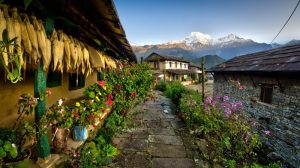
Pokhara Travel Guide is a major tourist hub in Nepal. It’s home to many tourist attractions and you will get to do a wide lot of things in Pokhara. In this Pokhara travel guide, we discuss travelling to, staying in and exploring Pokhara.
Pokhara has it all; including but not limited to skydiving, paragliding, rock climbing, hiking, cycling, boating to visiting tourist spots (like Davis Falls, Damside), and walking on the lakeside, enjoying live music, eating and shopping. You will get everything here and it’s the reason many trekkers choose to stop at Pokhara for trek preparations and also for relaxing after the trek.
How do I reach Pokhara?
Pokhara Travel Guide with Kathmandu hosting the only international airport in Nepal, you can not fly directly to Pokhara and which lies 200 km west of Kathmandu. Even Though 200 km may seem less to some, driving through not-so-wide hilly roads takes at least 5 to 6 hours. So, if you are not in a private vehicle it may take you 7 to 8 hours.
The easiest way to get to Pokhara is through a 30-minute flight. If you are not willing to fly, you can take a minibus or tourist bus. Tourist buses leave Jamal (near Thamel) at 7 am almost every day of the week.
The cost is $5-10 for minibuses and $20-25 for tourist buses. Tourist buses are preferred by most as they are comfortable and do not rush on the roads. Also, the hotels or cafes (where you stop by for breaks) are better while travelling on a tourist bus. Travelling in a local bus or minibus costs less but they are not comfortable and less preferred by travelers.
You can also choose to hire a private vehicle to reach Pokhara. Motorcycles, cars, jeeps and micro-buses are available for hire in Kathmandu. It is possible to hire with or without a driver. We also provide and arrange for transportation inside Nepal if necessary.
What to do in Pokhara?
Pokhara offers many tourist spots and also plenty of things to do. People planning to trek in the Annapurna region stay at Pokhara for 1-2 days for trek preparations and refreshments. It is a favourite of many. The city is full of tourist spots and some of the popular ones are Peace Pagoda, Devi’s Falls, Mahendra Cave, Old Bazaar, Bat Cave and Sarangkot. Apart from these, you can also roam around the city. The lakes contribute to the beauty of Pokhara. Lakeside is always an amazing place to walk around.
Boats in Fewa Lake
Pokhara hosts most of the adventure sports in Nepal. Paragliding, boating, bungee jumping, zip flying and skydiving are some of them. Most travellers plan these activities before or after the trek as Pokhara offers all to start or end the trek.
All kinds of hotels, restaurants, bars, cafes, lodges and resorts can be found in Pokhara. Most internationally known and other traditional varieties of food are available. You have a wide range of options for food and accommodation. Your accommodation options also range from cheap hotels as well as all-star hotels with hefty prices.
If you want to know more about these: Things to do in Pokhara.
Where to stay in Pokhara?
From cheap lodges and fancy expensive hotels, all sorts of accommodation options are available in Pokhara. Even if you are travelling with a trek or tour operator, you can choose the accommodation according to your needs. Similar is the case for food as you get street food, traditional food as well as western food.
The costs vary according to the area you plan to stay. Hotels around the Lakeside usually cost more than the others. Most travellers like to book a medium-cost room and enjoy themselves outside in the bars, restaurants and bars until late at night. Staying is not a problem as there are plenty of options in Pokhara but this may not be true on occasions like Christmas and New Year.
Costs and Currency
The costs of staying in Pokhara can vary according to your needs. If you stay in a cheap lodge, eat simple food, do not spend more in pubs/bars, use local transport or walk then your costs will be significantly low. Your spending in the city can be adjusted as per your budget.
Nepali currency is widely used in the city. You can exchange your money for Nepali currency in either Pokhara or Kathmandu. Indian currencies are also accepted in some places. But exchange for Nepali rupees for convenience.
How do I explore Around Pokhara?
Walking is probably the best option in winter. With fewer chances of sun and rain, you can explore the city on foot. But this is only considered if you are looking to explore the lakeside and nearby places. If you want to go to places like Begnas Lake and Davis Falls, walking is less of an option.
Hiring bicycles and motorcycles is a trend in Pokhara if you have prior experience of riding. However, the roads in Nepal are not that easy to ride and you should be careful. Helmets and insurance are some considerable preventive measures for this. Hiring scooters and motorcycles will cost you around $10-25 per day.
Hiring a taxi is less feasible as you will miss many things and limits your ability to explore. But if you want to go to places like Peace Pagoda, taking a taxi and walking is one of the best options. Negotiate and inquire before hiring a taxi so that you won’t be overcharged.
Peace Pagoda, Pokhara
Local transport is a good option if you want to save up on costs but you need to have information on the routes of the places and places. Ask people and the conductor (the person who collects bus fares), before jumping in.
Trekking from and to Pokhara:
Most of the Annapurna region treks start and end at Pokhara. Ghorepani Poonhill Trek, Annapurna Base Camp Trek, Mardi Himal Trek, Mustang Trek and Khopra Danda Trek all start and end at Pokhara. Similarly, some treks like Annapurna Circuit Trek end at Pokhara. Annapurna region and the sanctuary are around Pokhara. These treks are best known for views, mountains, forests, landscapes and culture.
Annapurna Region
All of these treks are enjoyable and you do not need to trek for many days from Pokhara to feel the adventure and explore nature as well as culture. These treks can be customized according to your needs.
Other short day hikes or treks of 2-3 days can be done around Pokhara. These include Dhampus Trek, Peace Pagoda Hike and Sarangkot Hike. These short treks and hikes are good to explore both natural and cultural aspects. We, Heaven Nepal Adventure are specialized in organizing all kinds of hikes and treks.
We hope the information in this Pokhara Travel Guide helps you. If you have any questions, please inquire. We aim to provide all information for travelling in Nepal.
A Complete Guide for Everest Base Camp Trek If you want to know more about the Everest base camp trek, you are in the right place! Use the menu below for easy navigation.
What to expect from the Everest Base Camp trek and is it worth it?
A Complete Guide for Everest Base Camp Trek reaching the foot of the highest mountains in the world is certainly an experience of a lifetime. Everest Base Camp trekking offers amazing cultural and scenic adventure in the Himalayas and is regarded as one of the greatest in the world and is known to amaze travelers.
EBC Trek unfolds gradually as you travel past busy cities, beautiful hill towns, traditional villages, ancient monasteries, rhododendron forests and to the foot of the majestic mountains. The trek as a whole is truly an experience of a lifetime. It will most certainly justify your efforts, time and money.
No wonder, Everest base camp trekking is your chance to explore and experience the culture, landscapes and scenery of the Everest region all the way up to the base camp of the world’s highest Mt Everest. Out of all the famous and adventurous treks, this trek has always been & is also considered one of the best treks in Nepal for a few decades now. The trek is favorable even for beginners and if you are an experienced trekker, you can combine the EBC with other destinations like Island Peak or Cho la Pass to make it more interesting and challenging.
Trekking Route
The most popular EBC trekking route is Ktm – Lukla – Namche – Tengboche – Dingboche – Lobuche – Gorakshep – EBC. You have options when it comes to Everest Base Camp Trek routes and you can choose to trek via routes or destinations like following the path of the first Mt Everest climbers.
Another famous EBC Trek route is the one followed by the first climbers of Mt Everest. Trekking starts from Jiri located in the North East of Kathmandu. After 8-9 days into the trek, you will reach Phakding on the regular Lukla trail of EBC.
Everest Base Camp Luxury Trek is for those who do not want to compromise on accommodation. The luxury trek includes private accommodation in the best tea houses and lodges even at higher altitudes.
Similarly, if you want to complete the trek in a short duration of 10-12 days, the Short or Rapid Everest Base Camp Trek is for you. This is also known as the budgeted EBC Trek. And, if you do not want to trek at all but want to reach the Everest base camp and view its amazing scenery, Everest Base Camp Helicopter Tour is for you.
Treks like EBC with Island Peak Climb and EBC with Cho La pass are suited for experienced travelers. The treks are a fit for those who have already been to Everest Base Camp and want more challenges. Nonetheless, first-timers and beginners can also complete these challenging treks.
Everest Base Camp Trek Map
There are plenty of options to reach the Everest base camp. You can combine the Everest Base Camp trek with other destinations (Gokyo Valley, Lakes, Cho la Pass) and activities (Island Peak Climb, Lobuche Peak Climb, Mera Peak Climb). The Everest base camp trek map below shows the possible trekking routes.
The packages are all designed to fulfil the needs of different travelers and adventurers. They are different in their routes, cost, activities, destinations and duration. It is up to you to choose the best trip that fits your needs and requirements.
Everest Base Camp Trekking Packages
Everest Base Camp Trek
Regular trek with normal itinerary and routes.
Everest Base Camp Luxury Lodges Trek
Designed for luxury travellers. Includes best quality accommodation & food.
Classic Everest Base Camp Trek
Reach Everest base camp through a classic trail.
Rapid Everest Base Camp Trek
Short EBC Trek for people who have less time.
Gokyo Cho la Pass via Everest Base Camp Trek
Combine Cho la pass with EBC for adventure.
Three High Passes with Everest Base Camp Trek
Trek through the three highest passes and to EBC.
Everest Base Camp Trek with Island Peak Climbing
For complete trekking and climbing experience.
Lobuche Peak Climb with Everest Base Camp Trek
Easy peak climbing with Everest base camp trek.
Everest Base Camp Helicopter Tour
For those who do not want to trek but still want to experience Mt Everest base camp.
If neither one of the treks fits you, send us a message and we will design a trip to match your needs.
This is the most common and popular itinerary for the Everest Base Camp Trek. Check through the packages for other itineraries.
14 Days Everest Base Camp Trek Itinerary
Day 01: Arrival at Kathmandu airport (1,340m).
Day 02: At Kathmandu and trek preparations.
Day 03: Fly to Lukla (2,820m) – 30 mins and trek to Phakding (2,635m) – 4 hrs.
Day 04: Trek to Namche Bazaar (3,440m) – 6 hrs.
Day 05: At Namche Bazaar rest day and a short hike to support acclimatization.
Day 06: Trek to Thyangboche Monastery (3,867m) – 5 hrs.
Day 07: Trek to Dingboche (4,350m) – 5 hrs.
Day 08: Rest day at Dingboche for acclimatization and a short excursion.
Day 09: Trek to Lobuche (4,980m) – 5 hrs.
Day 10: Trek to Gorakshep (5,180m) and to Everest base camp (5,364m) – 6 hrs.
Day 11: Climb to Kala Patthar (5,545m) and walk to Pheriche (4,230m) – 8 hrs.
Day 12: Trek to Namche Bazaar via Thyangboche. – 6 hrs.
Day 13: Trek to Lukla. – 8 hrs.
Day 14: Fly back to Kathmandu.
Food and Accommodation
In a city like Kathmandu, you will get plenty of options which range from cheap lodges to extravagant 5-star hotels and cuisines of all styles. However, once you move away from the city towards Everest Base Camp, the options for meals and accommodations will become limited.
The best accommodation available is tea houses and lodges. They provide basic facilities to eat and sleep. These places mostly serve traditional Nepali food “Daal Bhat Tarkari” (rice, pulses, and vegetables) and several other food varieties like Momo, Thukpa, and Thakali food. There are good lodges en route to Everest base camp and we make sure the lodges our guests stay in are the best. It is getting easier to find food and accommodation as the trek is becoming more famous over the years.
Everest Region Teahouse
Lukla and Namche Bazaar offer low to high-standard lodges and hotels. You will get all kinds of food from traditional Daal Bhat to pizzas and cakes, as it is the entry point for the trek. As you reach Tengboche, the options for food and accommodation lessen as the place has only a few hotels and not so many items on the menu. Places like Pheriche, Gorakshep, Thukla and Lobuche are also similar, having lodges and tea houses with basic food and lodging. These places being near to the Everest base camp are mostly crowded and require early booking during peak seasons. And, it is always a good idea to carry a sleeping bag. The food menu at places at higher altitudes of the trek usually includes these.
Breakfast- Boiled eggs, Omelettes, toast with jam/honey/butter, tea, coffee, milk, pancakes, porridges, cornflakes, Tibetan bread, and Chapati (Indian bread). Lunch and Snacks- Dal Bhat (rice, lentil, vegetable and pickle), Soups, pasta, sandwiches, potatoes, burger, spring rolls, thukpa (noodles), momo, and pizza.
Eating meat is questionable. Most travellers do not prefer meat as it is carried all the way up and is not fresh. So, advise you to enjoy eating meat while you are in Kathmandu. Carrying chocolates, protein bars, dry fruits, etc definitely helps.
Everything available in these remote villages and hilltowns are either sent through planes & helicopters or carried by people and animals. So, you may have to compromise a little for this adventure in the mountainous region. It is not possible to find everything and anything but we will try our best to ensure you the best available accommodation and tasty & nutritious meals during/after the trek.
Internet and Communication
Wi-Fi and other major communication options are easily available in major cities and even in some villages on your trek. Using Wifi may cost you extra in some remote places. Wifi, charging and hot showers are available and mostly free in Kathmandu but you may need to pay extra for these during the EBC trek. You can use mobile data in some places too. However, we advise you to enjoy the walk while you are on the trek.
How can I trek to Everest Base Camp?
There are a few ways to hike to Everest base camp. You can choose to trek with an agency, trek completely independent or trek by only hiring guides/porters. First-timers are not recommended to trek independently. Everest base camp with a trekking agency includes programs starting and ending at Kathmandu. These are your options to reach EBC:
Fly to Lukla and trek to EBC
You can reach Lukla from Kathmandu on a Flight. You can then trek towards EBC starting from Lukla through Namche, Tengboche, Dingboche, Pheriche and EBC.
Drive to Salleri or Jiri and trek to EBC
You can also drive to Jiri located in Dolakha district or to Salleri (lower Solukhumbu) and start trekking towards the Everest region. The trekking route is longer and you will be able to explore a lot more than the regular hike to Everest Base Camp.
Fly directly to Syangboche or Everest Base Camp
While you are highly recommended to trek, you can also reach EBC directly on a Helicopter. If you do not want to trek, this is the best option for you. You can also choose to trek to Everest Base Camp and then return on a helicopter if you do not want to trek back.
Internal Flight Delays and flights to Lukla
Due to the geographical diversity and unpredictable climate in the Himalayas, internal flights are often delayed or cancelled. Weather conditions like heavy rainfall, storms, or fog can disrupt flights. So, it is wise to spare an extra day or two as buffer days, in case of flight delays and cancellations. Likewise, it is also necessary to note that the weather conditions are great during the spring (March to May) and autumn (September to November) seasons. If you have enough time, you can also choose road transportation in such cases.
Due to the Air Traffic at Tribhuvan International Airport, all flights to and from Lukla will now be operated from Ramechhap Airport, which is a 4-hour drive from Kathmandu. The transportation to/from Ramechhap will be provided by the agency. It is good to keep a few extra days for the trek in case of flight delay or cancellation.
Trekking Guide for Everest Base Camp
If you are not an experienced trekker, you might be better off trekking with a guide and/or porter. Even experienced trekkers need help from guides and porters to complete the trek safely and without difficulties. Normally, the cost of guides and porters is included in a trekking package.
Most people can not carry a lot of weight during the trek or some may not even want to and for this, they hire a porter. Hire professional licensed guides and porters for the trek.
You are not just hiring a guide or a porter. The guides and porters will also be your trekking buddy, a friend, a listener and someone who helps you throughout your trek and to create an experience of a lifetime.
EBC Trek Difficulty, Duration and Distance
The trek to the foot of the world’s highest mountain is not going to be easy. EBC trek difficulty can be graded as moderately difficult. People of all ages have done this trek. It does require some preparation to ensure you can walk for 6-7 hours in the mountains and hills for around 10 days. Some people (who have completed the trek) say that preparations are not necessary. But, we encourage you to work on your fitness (if you don’t already) to ensure a successful trip.
The trek is a long & moderately difficult hike to a maximum altitude of 5545m. The trek is not so difficult as some may see it but you need to be prepared physically and mentally. Prior experience in trekking or hiking will help you on this trek.
The trek requires you to walk 80 miles in around 10 days through the hills and mountains. As mentioned earlier, you should be able to walk for 6-7 hours per day on average for 8-10 days. For some, it is easy while for some it may be somewhat challenging.
Stamina and endurance are necessary. Hiking, swimming and engaging in other physical activities or sports is a good idea to prepare if you feel you are not ready. Consulting a professional (physician/doctor) is advised if you have any concerns regarding your health and fitness.
The altitude of the Trek
Trekking starts as you reach Lukla at 2820m. You will then gradually trek through Namche Bazaar (3,440m), Thyangboche Monastery (3,867m), Dingboche (4,350m), Lobuche (4,980m), Gorakshep (5,180m), Everest base camp at 5,364m, Kala Patthar (5,545m), Pheriche (4,230m), Namche Bazaar and finally Lukla. It is better to have days for acclimatization at altitudes above 3000 meters and most people rest and acclimatize at Namche Bazaar and Dingboche. Everest Base Camp sits at an altitude of 5365 meters and the highest point is Kala Patthar is at 5545 meters. You will gain 400-800 meters on a daily basis. Below is the altitude chart of the trek.
Altitude Sickness on the Everest Base Camp Trek
Trekking to the Everest base camp can be challenging. Acclimatizing and resting at higher altitudes can help you avoid altitude sickness. We are aware of particular places where you need to stay to acclimatize. You should walk slowly and steadily to complete the trek without difficulties.
In the case of AMS, we have crews who are experts in dealing with altitude sickness effectively and smartly. In case of emergency situations, you will be taken to the nearest hospital or to Kathmandu by helicopter.
Altitude sickness should be considered while trekking to EBC. We design our itinerary to match your safety needs. So, we acclimatize and rest (2 places for a regular 15-day EBC trek) to avoid AMS. We have seen people of all backgrounds, professions and physiques complete the Everest base camp trek. And with the right plan and preparation for Everest Base Camp Trek, you can do it!
How can you pre-respond to Altitude Sickness on EBC Trek?
Consult your physician before the trek.
Informing our crews about feeling uneasy.
Walking in groups so that you can help each other.
Carrying Diamox (Acetazolamide).
Travel Insurance.
Acclimatizing and resting before heading towards high altitudes.
People and Culture
Owing to the diverse cultural following, people in the Everest region follow different cultures, traditions, and religions and still live with a sense of togetherness. Hinduism, Buddhism, Islam, and Christianity are the most famous, with Hindus and Buddhists having the highest numbers. Solukhumbu areas are mostly populated by Buddhists and cultures similar to Tibetian.
One thing in common with Nepalese no matter what culture they are following is their hospitality. People in the region abide by their ethos that “Guests are our gods” so, be ready to be greeted with shy but warm smiles and helpful hands in your journey. You will get to know more about life in the mountains. People are amazing and they’ll do their part to help you take back fantastic memories of your time in Nepal.
Best time to hike to Everest Base Camp Trek
Spring from February to May and Autumn from September to November are considered the best time for Everest Base Camp Trek. Clear views and warm days during these months make trekking favorable.
Everest Base Camp Trek Weather from February to May is perfect to walk around the Khumbu area. The forests are blooming with rhododendron. The daytime is mostly clear for scenic views and photographs. The minimum temperature around high altitude areas is 0° C at night to a maximum of 20° C in the daytime. Mornings and evenings can be cold, depending upon the altitude and there are slight chances of showers and snow sometimes.
You can also choose to trek to EBC in Autumn. The days are mostly clear and the months of winter can be very cold at altitudes above 2,800m. The temperatures can reach the freezing point of a minimum of -10° C during nights to a maximum of 15° C with small hours of sunlight. The days are clear for views and walks.
Trekking to EBC in winter and monsoon can be challenging. Sometimes, the trek may not be accessible in extreme weather conditions. You might be affected by delays and uncertainties in flights, roads and trekking trail weather during these months. Heavy snowfall and rainfall may also affect the trek. It is better to know about the accessibility and availability of the trek beforehand during extreme winters and monsoons. EBC trek can be done in almost all seasons and months but there are uncertainties during monsoon (wet months from mid-June to mid-September) and extreme winters (Mid-December to Mid January).
If you need information about availability, weather & or free consulting for the EBC trip, Inquire Us.
Trekking to EBC through a local operator
If you know the country well enough and can organize the trek all by yourself then you can trek to EBC without agency while saving some money. However, trekking through a local operator surely has some benefits. Trek operators can help you save a lot of hassles, time and money (Yes, $$$). You can also choose from some specific services of the operator. Trekking through a local agency ensures reduced hassles for arranging permits, accommodation and transport. So, it is a good idea to trek through a trekking agency to be on the safe side. We will plan and operate a perfect, safe and secure trek while you can relax, explore and enjoy.
Group Size
The group size for the Everest base camp trek can be anywhere from 1 to 15 people. The standard costs are set for groups of 2 or more people. Early bookings (like a week before) are recommended if your group size exceeds 10 people. When you are trekking alone through an agency, you can also join a group. This is also known as Fixed Departure. This can be explained as – ‘The agency has a chosen fixed date to start the trek and people join the trip (group). OR in other cases, the agency finds a group and arranges for you to join in with other people. This can help you to reduce costs as you can share a guide, porter and other services.
Trekking Crews: Guides and Porters
Most of the trek operators provide guides and porters. A porter is for every two members of the group and will be carrying a backpack (not more than 25 kg). We offer trekking guides that are English-speaking, government registered and well-trained. Trekking crews are knowledgeable about the trek, destinations, and responsible and eco-friendly tourism. Also, sometimes an assistant guide is provided (call is Sherpa) for people in a group of 4 or more.
What do I pack for the EBC Trek?
Many people are confused about what to pack for the Everest Base Camp Trek. Luckily, we have compiled a perfect Everest Base Camp packing list for you based on the experiences of previous trekkers.
Everest Base Camp Trek Cost
Trekking in Nepal is cheaper than trekking in other nations. Everest base camp trek cost depends on many factors like days, trek route, modes of transport accommodation, food, and many more. These factors make up the total costs of the Everest base camp trek. Everest base camp trek 14 days cost is around $1400 with regular services (accommodation, transport). The prices will go up as you increase the quality or quantity of services.
If you want to travel alone, the cost of hiking to the Everest base camp can be comparatively lower. But you should be able to manage all the services you need for the trek. The below information is for the Everest base camp guided trek but it also gives an idea of the cost for independent trekkers. If you want to know more, the costs of trekking in Nepal and EBC Trek Costs will help.
Trekking permit and visa costs
The visa for 15 days costs USD 30, USD 50 for 30 days, and USD 125 for 90 days. If your visa is about to expire but you are not yet done exploring the country, you can get your visa extended for USD 3 per day and if your visa has already expired, it costs USD 5 per day. You will need these permits for trekking to Everest Base Camp:
Khumbu Pasang Lhamu Rural Municipality Permit
Cost: NPR 2,000 per person
Sagarmatha National Park Permit
Cost: NPR 3,000 per person
Khumbu Pasang Lhamu Rural Municipality Permit can be obtained in Lukla and Monjo. The permit is not issued in Kathmandu. Sagarmatha National Park Permit can be obtained either in Kathmandu or at the entrance of the park at Monjo. You can get the national park permit from Nepal Tourism Board, Kathmandu. Passports are required to issue the permits. We, Heaven Nepal Adventure can also arrange the permits for the Everest base camp trek if necessary.
Guides and Porter costs
Hiring guides and porters is a good idea if you do not want to enjoy the trek and want to reduce hassles. The guide and porters will help you with anything during your trek from carrying your backpack and showing you the way to arranging accommodation and transport. You can either hire independent guides or book a trekking package. The cost for hiring a guide for the Everest base camp trek is $25 – $40 per day. This cost varies with experience, trekking route and seasonality. For guides, the cost is $20 – $40 again depending on factors like routes and season. If you are booking through a trekking agency, the cost will include the cost of guides and porters.
Food and Accommodation Costs
Everest region has plenty of tea houses and lodges but they are packed in peak seasons. The lower altitude areas like Lukla, Kathmandu and Namche Bazaar offer options for food and accommodation. But once you start to reach altitudes higher than 3000m, the options are limited. Bringing dry fruits, chocolates and bars is definitely a good idea. You should be careful in what you eat and are advised to carry water purifiers. Not getting sick is a challenge for anyone who has less experience in the mountains. The cost of everyday food and accommodation for the Everest Base Camp Trek is around $30. This is usually enough for 3 meals and a few miscellaneous expenses per day.
Transport costs
The flight to Lukla is the only transport (apart from travelling to Kathmandu from your country) you will be needing for the regular Everest base camp trek. The flight from Kathmandu to Lukla costs around $180. In the case of road transport, reaching Jiri or Salleri or Ramechap from Kathmandu will cost you around $50 on local transport. Similarly, hiring a private vehicle will be costlier.
Trekking gears costs
Trekking gear is needed for hiking to the Everest Base Camp like any other trek. The gears are necessary but may vary according to your needs. The total cost of trekking gear for EBC trekking will be around $2000 to $3000 if you intend to buy them all. But, you may already have plenty of trekking gear and that definitely means you won’t have to buy them all. Trekking shoes, windproof jackets, trekking trousers, gloves and sunglasses are some of the necessary ones. Most of the trekking gear will also be available for hire in Thamel, Kathmandu and you can hire or buy the ones you need during your stay in Kathmandu. Check our Everest Base Camp packing list so that you do not miss anything. This is a general list and you may include/exclude stuff according to your needs.
Travel Insurance for the Trek
Trekking in Nepal is surely an experience not to miss but this comes at a risk. Like any other trekking route and destination, the Everest base camp trek has challenges and difficulties. Various unexpected circumstances have a chance in the Himalayas. Insurance is thus a necessity while trekking in Nepal, especially for beginners. 30 days of travel insurance costs around $150. This type of insurance is generally enough for Everest Base Camp Trek and also for other treks to Nepal as it covers all requirements up to an altitude of 6000m. Research insurance policies in detail and make sure it covers all requirements for the trek before purchasing.
Entering Nepal
International flights are only available through the Tribhuvan International Airport in Kathmandu. Flight is the easiest way to enter Nepal. You have two options travelling by land, via India and China. There is also a direct railway line connecting India and Nepal along with several bus facilities for travelling across the border from India. Travelling by road through India is the most easily accessible. You can travel to Nepal through Sunauli- Bhairahawa, Raxaul – Birgunj, Siliguri- Kakarbhitta, Banbasa – Mahendranagar, or Bahraich- Nepalgunj. Kodari and Kerung are two entry/exit points stationed at the Nepal-Tibet border.
Nepal Visa
Tourist visas for Nepal can be obtained either in your home country (Nepalese Diplomatic Missions) or you can also get an arrival visa at the Kathmandu airport. The visa for 15 days costs USD 30, USD 50 for 30 days, and USD 125 for 90 days. If your visa is about to expire but you are not yet done exploring the country, you can get your visa extended for USD 3 per day and if your visa has already expired, it costs USD 5 per day.
Find more info about Nepal Visa at: http://www.nepalimmigration.gov.np/post/notice-regarding-visa-fee-updates.
This EBC Trek guide is a compilation of years of experience in organizing and operating Everest Base Camp Treks. If you have any queries or require any information on this trek or any other treks in Nepal, do not hesitate to contact us.
Nepal Wildlife Jungle Safari you may have plenty of options to view and enjoy wildlife, flora-fauna & bird life in Nepal. Some of these available options are elephant rides, jungle walks, jungle jeep rides, treks, bird-watching walks, Machhan (tower) visits and canoe rides to view crocodile & bird life.
All wildlife activities in Nepal can be enjoyed by staying in the comfort of nice hotels, lodges or jungle resorts. The program is led by expert jungle guides and naturalists to make you informed about the ride.
Nepal is rich in biodiversity due to its unique geography. Elevation in Nepal ranges from 60m above sea level to the highest points on earth with Mt. Everest at 8,848m within a distance of 150 km resulting in dramatic climatic changes from sub-tropical alpine to an arctic zone.
Nepal occupies only 0.03% of the earth but is rich with 2% of all the flowering plants in the world; 8% of the world’s population of birds (more than 857 species); 4% of mammals on earth; 11 of the world’s 15 families of butterflies (more than 500 species); 600 indigenous plant families; 319 species of exotic Orchids. So, you can not afford to miss Nepal Wildlife Jungle Safari.
5 Reasons to Visit Bhutan & the Best Time to Visit:
5 Reasons to Visit Bhutan & the Best Time to Visit is the last Shangri-La, Bhutan is a country like no other. Bhutan is a unique blend of culture and nature offering us countless reasons to visit Bhutan. Spring is considered the best season to visit Bhutan as it offers you to explore both amazing nature and deeply rooted culture.
Bhutan, also known as the ‘Land of Thunder Dragons’, is a sovereign country in South Asia. The landlocked country is located on the foothills of the Himalayas. Bhutan is bordered by China in the North and India in the South, East, and West.
The tourism industry is one of the most dominant industries in Bhutan. Bhutan has attracted travelers with its captivating beauty. The country is rich in cultural diversity. Bhutan is also known for its famous festival of ‘Tshechu’ that happens around this time of the year in various places.
Best Time to Visit Bhutan
Spring is the best season to visit Bhutan and more specifically, March and June are the best months to go to Bhutan. Spring is the peak tourist season in Bhutan. The valley is blooming and the season offers the best weather to visit Bhutan. October, November and December are also among the best month to go to Bhutan.
However, the best season for Bhutan can vary according to your travelling needs and the kind of experience you want to have. Paro Festival is one of the best times to visit Bhutan if you want to witness and experience the celebrations, traditions and people’s lifestyle. If you want to explore the wilderness and be away from the crowds, the best time to visit Bhutan for you might not be during peak tourist season like Spring but rather an early winter season. For this, early winter is considered as one of the best seasons to visit by some travelers as the weather is clear, days are sunny and views are unobstructed.
5 Reasons to Visit Bhutan
There are countless reasons to visit Bhutan and here are some of them.
Gross National Happiness
Rather than focusing on production and economic growth, Bhutan is the only country in the world that measures its Gross National Happiness as an indicator of its prosperity. The four pillars of GNH are the promotion of sustainable development, promotion and preservation of cultural values, conservation of the natural environment and establishment of good governance.
Imagine for a moment what it is like to travel to a country where citizens’ traditions, values, environment and future are of the utmost importance to its government. Now that’s something to think through!
Festivals of Bhutan: Tshechu Paro
Festival in Bhutan, Paro
There’s really no better way to get to know a place than to experience it during a time of celebration. Paro Festival is one of the biggest festivals in Bhutan. The Spring season brings Tshechu Festival and it is considered the best season to visit Bhutan.
Costumed and masked performers carry out ceremonial Buddhist dances that are considered a privilege to witness. You’ll also have the chance to observe the unfurling of the world’s largest religious Thangka scroll and the Paro Thongdrel.
Less travelled roads
If there is such a thing as the less travelled road, this is it! Bhutan offers you the world’s less travelled roads. You will be embarking on a journey only a handful of tourists have made. Visitors were only allowed in the Ha Valley in 2004 and very few have been to Dorikha, the village where you will be experiencing a local homestay.
The Drop people of Dorikha are among the last traditional nomads in the country. Most families will have just arrived back in Spring from their winter village. You will not be on the tourist trails sleeping in hotels but rather eating and living in a local Bhutanese way. During this, you will get to experience true Bhutanese culture and life.
Chomolhari Trek is one of the best treks to visit some amazing places in Bhutan. This 12 Days Bhutan trek comprises walking through adventurous offbeat paths and the views of some amazing snow-capped mountains.
Druk Path Trek is a popular short trek through the paths of beautiful Bhutan. The 7 days-long Druk path trek takes you to the green forests, high mountains, monasteries, temples, and so on of Bhutan which is probably unique and will help you garner awesome experiences. The best season for Bhutan Druk Path Trek is Spring and early winter.
Need we say more? All these reasons add up to the beauty of Bhutan to give us many reasons to visit Bhutan. If you are confused or require any information on planning your Bhutan trip, inquire about us.
‘ABC Trek is an adventure in the heart of the scenic sanctuary at the foot of the world’s 10th high Mt. Annapurna. This is an Annapurna Base Camp Trek blog for why one should choose this trek.’
Why Annapurna Base Camp Trek?
Why Annapurna Base Camp Trek (ABC Trek) is also known as Annapurna Sanctuary Trek because the trek is within the Annapurna Sanctuary. There are countless reasons why one should choose to go to Annapurna Base Camp.
From the experience of a lifetime to one of the most picturesque and beautiful areas around the Himalayas, this trek has it all for you. Annapurna Sanctuary Trek or ABC Trek is one of the most famous treks in the world and it can not be discarded by adventurers.
Let’s take a look inside the reasons to choose ABC Trek.
Trekking on the foothills of Majestic Peaks
Annapurna Himalaya Range is one of massive and the longest ranges of mountains. It extends towards the west to the world’s 7th highest Mt. Dhaulagiri (8,167 m) and towards the east to the world’s 8th highest Mt. Manaslu 8,163 m. The Annapurna Base Camp Trek route goes through the foothills of the Himalayan Range which offers the experience of a lifetime.
Annapurna Area
Daily Views of Annapurna and Fishtail Mountains
ABC Trek offers scenic views of Annapurna and Machhapuchare mountains on daily walks through ups and downs of the hill. You will start to see these mountains from the starting point (Pokhara) of your trek to the very last day when you return to this point to end your trek.
Cultural aspects of Annapurna Sanctuary Trekking
The trek offers you a chance to witness interesting and impressive Gurung villages enriched with Buddhism religion, heritages and colourful culture. The Gurung, Thakali, Magar and Manage are common tribes of the Annapurna Region. Places like Ghandruk and Chommrong which are en route to Annapurna Base Camp are well known for Gurung people and their culture.
Way to Annapurna Base Camp
Walk through forests and hills to reach mountains and glaciers
You will walk into deep alpine woodland of tall rhododendron-magnolia-oaks-pines and fir tree lines which lead you beyond green vegetation towards remorseless fields of ice and glaciers.
Nice places to stay with warm hospitality and amazing views
During Annapurna Sanctuary Trek, you will be in the comfort of nice cosy huts serving as lodges with excellent food menus. These also include rooms facing an incredible panorama of mountains and you will feel the warm hospitality of the local Gurung people.
Fine Meals throughout the Annapurna Base Camp Trek
ABC Trek is probably the one and only base camp trek in the Himalayas where you can find nice lodges, tea houses and inns for overnight stops with great meals. From local to continental menus, you can have breakfast and lunch facing the marvellous scenery of the mountains.
Least Chances of Altitude Sickness
The Annapurna Base Camp Trek has the least chance of altitude sickness. The ABC Trek has elevation gains at a gradual pace with time for acclimatisation on walks with overnight stops. If you choose to go for the Short Annapurna Base Camp Trek or Rapid Annapurna Base Camp Trek of around 7-8 days, you are more likely to experience altitude sickness but a normal trek of 13 days would rule out most possibilities for altitude sickness.
Complete Trekking Experience
Annapurna Sanctuary Trekking provides a complete trekking experience. As you will walk from a low warm sub-tropical climate to cooler alpine mid-hills then reach an arctic zone of ice, moraine and glaciers. You will get a chance to experience all aspects of Nepal including Nature, Mountains, Vegetation, Culture and People.
Various Options for Annapurna Base Camp Trek Route and Duration
Annapurna Sanctuary Trek offers options for variations as per your needs and time. You can trek for less than a week to reach the base camp or continue for more than two weeks if you have enough time. The walks are enjoyable and you will be facing excellent views of Annapurna Himalaya from the start to the end of the journey.
Annapurna Base Camp by Helicopter
You can also choose to visit Annapurna Base Camp by Helicopter if you have limited time or if do not want to trek. Annapurna Base Camp Helicopter Tour will offer you amazing views of landscapes and North Mid-West Himalayan peaks. However, Annapurna Base Camp Helicopter Tour Cost is around 3700 USD which is comparatively high and most people choose to explore through trekking. Not to mention, trekking is the best way to explore Nepal.
Experience Nepalese Lifestyle and Culture
Explore traditional Gurung villages of medieval period farm life with ancient culture and heritage with Annapurna Base Camp Trek. You will witness its amazing culture as villagers greet you with warm hospitality and friendly smile. If you want to know more about the Nepalese lifestyle and culture, speaking and interacting with locals is the best way to do so.
Chomrong, Annapurna Region
Annapurna Base Camp Trek is one of the most famous treks in Nepal. It is moderately hard and it offers breathtaking views with various options to choose from on this scenic and cultural walk to Annapurna Base Camp Trek.
Here’s a bonus.. the list of things to do on the Annapurna Base Camp Trek. Many of us are confused about trekking in Nepal and we try to solve the problem by putting out as much information as possible. Let’s dive right in.
Things to do on ABC Trek
Enjoy and explore Pokhara
Pokhara is one of those enjoyable and exciting cities in Nepal you cannot afford to miss. This amazing city lies on the lap of Annapurna and Machhapuchhre Himalayas marking your entry and exit points to most of the Annapurna region treks.
Fewa Lake Pokhara
Most travelers enjoy and relax at Pokhara usually after their treks. With all the pubs, bars, tourist spots, lakes, temples, mountain views and adventure activities, the place offers a perfect environment for all kinds of tourists.
Explore villages with rich culture and beauty
ABC trek will take you to amazing villages in the region allowing you to meet the local tribes of Tamang, Magar and Gurung.
Ghandruk Village
If there’s one village you should not miss visiting in the Annapurna region it’s Ghandruk. The village has a lot to offer including a Gurung museum. Ghandruk is filled with cultural richness and amazing people. Many tourists dress up as a local tribe of this region and you can do the same if you want to.
Ghandruk Village
Natural Hot Spring
There are many hot springs in the Annapurna region. On your ABC trek, you can relax at Jhinu Hotspring while returning back from the trek. This hot spring is particularly famous as it is on the returning trail of ABC Trek and trekkers often relax here.
Look out for amazing panoramic mountain views.
ABC Trek is famous for the amazing views it offers. As most of the trek offers majestic mountain views and landscapes, you will get these amazing views every now and then. All in all, the trek will allow you to view panoramic views of mountain ranges.
Amazing sunrise and sunset views from Poonhill.
Poonhill
Most trekkers say that ABC Trek without Poonhill is incomplete and you should include Poonhill in your ABC trek itinerary. It is considered one of the best viewpoints in entire Nepal. It offers refreshing sunrise and sunset views.
Annapurna Sanctuary
The conservation area is home to a variety of flora, fauna and even endangered wildlife. The ABC Trek is entirely within the Annapurna Sanctuary.
The Annapurna Sanctuary or Annapurna Conservation Area is where you will be hiking for the most part of the trek and it is rich in biodiversity with 1,226 species of flowering plants, 105 mammals, 518 birds, 40 reptiles and 23 amphibians.
Try the local food.
During the trek, you will get both traditional and Western food. It is a nice place to explore local tastes but be careful that not all food is good during the trek. Choose the ones that you’ll not regret later. Local apple wines are also available in the Annapurna Region.
Machhapuchhre Base Camp (MBC)
Even Though this base camp is not much spoken about, it certainly is a base camp of the beautiful mountain Machhapuchhre (6993m) and has a lot to offer. You will probably spend a night in MBC and you should consider exploring the base camp.
Comment or inquire us if you have any queries. If you like this, do not forget to tell your friends.
A historical place and present capital city of Nepal Kathmandu is home to immense culture, numerous world heritage sites and amazing landscapes. So, there are plenty of options when it comes to places to visit in Kathmandu.
Places To Visit In Kathmandu is an ancient city where you can enjoy from arrival to departure visiting its old and new places. Kathmandu is the historical & present capital and also the main hub of Nepal. The valley is always an interesting place to be.
Despite its small area, Kathmandu is home to numerous cultural, historical and religious places listed even as UNESCO World Heritage Sites. Kathmandu is probably the one and only city in the world where both religions Hindu, Buddhist and other religions blend in perfect and peaceful harmony with temples and monasteries close to each other. Let’s start right in and find out places to visit in Kathmandu.
Kathmandu Durbar Square
Kathmandu Old Durbar Square includes historical Palace temples and historical monuments, a famous Temple of Kumari (a living Goddess of young virgin girls). Newars have been worshipping Kumari as the tradition started in the ancient Malla period.
The area also comprises old Malla to late Shah Royal Palaces turned into museums. The other places of interest are Kastamandap Temple, the name Kathmandu means a temple built of the wood of a single tree. People of Kathmandu are also engaged in artworks like art in stores and wood around Kathmandu Durbar Square and there are plenty of them on the site.
Swayambhunath Stupa
Swayambhunath Stupa, another must-visit in Kathmandu, is a Buddhist site of great significance and it offers amazing vibes. The stupa symbolizes Buddhism and Buddha’s enlightenment. It is a hillock and you can view the panorama of the city. It has also been known as Monkey Temple since the 1970s. The area also hosts temples, monuments and museums dating back to the Lichhavi period.
Pashupatinath Temple
Pashupatinath Temple is dedicated to Lord Shiva, one of the main three gods of Hinduism after Vishnu and Brahma. Once a year a great religious festival takes place in the month of February called ‘Shiva Ratri’ (Shiva’s birth anniversary). Thousands of pilgrims from Nepal and India visit the temple during the festival.
Although non-Hindus cannot enter the main entrance, you can observe the golden-roofed temple with four silver cardinal doors and religious activities from the side of the Bagmati River even if you are not Hindu. Dead bodies are burnt at the bank of the river and it is believed that the ashes flow to the Ganges.
Bauddhanath Stupa
Famous Bouddhanath Stupa is also known as ‘Little Tibet’. The place is famous as it is one of the best places that offer good vibes and energy even in the midst of the city. Boudhanath Stupa is a wonderful place to be especially in the evenings. There are Buddhist people with a similar culture to Tibetans known as the Nyinpa (Red Hat) sect of Buddhism.
The four mystical eyes of Lord Buddha have four cardinal sides which are believed to watch people from wrongdoing and the painted white with saffron colours make the image of a lotus flower which is regarded as purity.
People enjoy walking around the huge dome-shaped Stupa. It is considered the world’s largest of its kind and is believed to have been built by Lichchhavi King Mana Dev in the 5th A.D. The stupa is constructed on an octagonal base with prayer wheels around it.
Dakshin Kali
Dakshin-Kali has located about 10 km from Kathmandu. Dakshin-Kali holds religious importance and thousands of devotees visit the temple a year to offer prayers. It is also known for animal sacrifices to the ferocious-looking Goddess Kali. Nonetheless, it is a beautiful and serene spot within the green forest away from the crowds. The way to Dakshinkali also offers panoramic views of Kathmandu. These are only a few, to be honest, and Kathmandu does not fail to offer a lot of things. There are plenty of places and every traveler has a choice.
Adventure Sports in Nepal amazes travelers and there are plenty of options to choose from. Adventure sports in Nepal range from floating in the Himalayan clear blue sky with Paragliding to daredevil Bungee Jumping. Major adventure sports available in Nepal include the highest marathon run, hair-raising sky-dive, paragliding, riding high on Ultra-Light aircraft and scenic Mountain Flight with views of majestic Himalayan peaks.
In the backdrop of mighty Annapurna Himalaya: Ultra-Light Aircraft
Pokhara offers an enjoyable short flight in ultralight aircraft that takes place from sunrise to 11:00 am and from 3 pm to sunset every day except in monsoon season (July to mid-September).
The major highlights of the flight include amazing scenery, panoramas of Pokhara valley and the lakes with massive mountain ranges including Annapurna, Manaslu, Dhaulagiri and Machhapuchare ‘Fish Tail’. You will also be able to witness green hills and valleys dotted with farm villages. Ultra-light aircraft is an ideal way to enjoy and witness spectacular scenery from a new perspective.
Bungee Jumping in Nepal
Bungee Jump
Bungee in Nepal offers a remarkable 160m/500 ft drop into a gorge of raging Bhote Kosi River which is one of the longest free falls in the world. Bungee Jumping is a great adventure, one of the most famous adventures in Nepal and it should not be missed.
Paragliding in Nepal; floating in the Himalayan Sky
Paragliding in Pokhara with Mt Fish Tail in the background.
Paragliding in Nepal was started in Pokhara and can also be done near Kathmandu Valley in Phulchowki Hill. Pokhara is considered foremost for paragliding as it is closest to the Annapurna mountains and it offers awesome scenery. The paragliding trip starts with a short drive to the hill of Sarankot at 1, 460 meters. Running, jumping and gliding above the scenic Pokhara valley with awesome scenery takes about 45 minutes as you finally land beside the beautiful Fewa Lake.
Kayaking and Rafting
Kayaking and Rafting are popular adventure sports in Nepal. Kayaking on the torrent raging in the glacial rivers of Nepal is a must-experience for experts. If you want to learn kayaking in Nepal, several rafting companies offer training.
Canyoning in Nepal
Nepal also features another adventure water sport called Canyoning, where you abseil from torrent waterfalls. This adventure sport is gaining popularity among adventurers. It is also one of the 1-day programs involving a walk or hiking to the waterfalls spots.
Sky Diving in Nepal
Out of various adventures in Nepal, skydiving is another sport that is gaining popularity every year. Skydiving in Nepal is an overwhelming experience surrounded by the world’s highest peaks including Mt. Everest. It involves flying in a small plane near Everest and jumping with a parachute. Skydiving’s availability can change due to weather conditions.
Zip Flyer in Nepal: World’s most extreme zip line
A 1,800 meter long, 2000 ft vertical drop and 120 kph speed with 2 mins ride time are what a zip flyer sounds like. If you are looking for a true adrenaline rush then Sky Zip Flyer Nepal is for you. It is truly an experience not to be missed.
Participants must be between 35 and 125 kgs (75 and 275 pounds) and also require to be comfortable with heights. This Zip Flyer ride is not recommended for individuals with back or neck problems and those who are pregnant.
Everest Marathon
Nepal offers various marathon runs from the high mountain range, and high hills to scenic valleys and all in the shade of the world’s highest mountain ranges. This is one of the most popular and acclaimed marathons runs in the world named ‘Tenzing -Hillary Everest Marathon’ or THEM in short.
It is recorded in Guinness Record Book as the highest Marathon in the World. It covers a distance of 42.195 km as per the International Marathon and Olympic Standard. This marathon also passes through the traditional route to Everest pioneered by the Late Tenzing Norgay Sherpa and Sir Edmund Hillary while climbing Everest in 1953.
Mountain Flight
If you are not trekking in Nepal but still want to view the highest peaks in the world, this is an opportunity for you. It is once in a lifetime experience, one of the easiest ways to view the panorama and scenic views of mountains including Mt Everest.
Mountain flight operates nearly all seasons of the year, however, spring ( February to April) and autumn/fall (September to November) are the best time to enjoy the views of Majestic Himalayan Peaks like Manaslu, Ganesh, Langtang, Jugal Himal, Everest, Makalu and Kanchenjunga.
Most domestic flight operations in the morning from 6.30 am to 9.00 am and the flight time is 50-60 mins.
Rock & Wall Climbing
Rock and Wall climbing trips’ lengths can range from 1 to 7 days. These are the rock climbing areas in Nepal.
Nagarjun Forest
30 mins drive from Kathmandu.
3-4 hrs courses as per the group size.
Hattiban
1-hour drive from Kathmandu.
3-4 hrs courses as per the group size.
Bimal Nagar
20 mins drive from Bandipur.
3-4 hrs courses as per the group size.
Nagarkot
2 hrs a drive from Kathmandu.
3-4 hrs courses as per the group size.
Namche Bazaar
Bouldering area.
3-4 hrs courses as per the group size.
Besides the above location, we do train in other areas around Langtang & Rolwaling Valley.
Transportation, packed lunch and drinking water are usually provided for rock and wall climbing programs. You will have to bring personal rock climbing equipment like a harness, carbineer (lock/unlock), gloves and climbing shoes suitable for the climb. Main ropes and other necessary items will be provided by the school.
Mountain Biking in Nepal
Mountain Biking is one of the best ways to witness local rural life riding through villages and towns, ancient heritage sites, and exploring forgotten trails and areas that other people seldom visit. Mountain Biking Tour can be done for 1 day to a week duration in and around Kathmandu valley. This will show you the backside of Kathmandu from modern life to village life; a blend of scenery, culture and history. Mountain biking offers fascinating mountain views towards the north of Kathmandu; a panorama of snow-capped mountains like Annapurna, Manaslu, Ganesh, Langtang, Jugal, and Everest towards the far eastern horizon.
Another option for adventure-seeking mountain bikers is to reach Pokhara from Kathmandu avoiding the main highway. Lhasa to Kathmandu biking tour is a long mountain bike tour with North Everest Base Camp in Tibet. You will ride 1,100 kilometers in 12-15 days. Around Annapurna, mountain biking can be done with the Thorang-la pass at 5,416 meters. It is one of the most overwhelming mountain biking trips in the whole world that you can do in a 2 weeks duration.
Most adventure sports and activities are one-day programs and are led by an expert team of staff and instructors. These can be done as an extension before, after or during your major trip. Contact us if you are confused or require more info.
Covid-19 and Nepal Travel Updates will Remind you we had two pandemics and we’re still in the middle of both of them. One is COVID-19 and the other’s a pandemic of lockdown will start finally from 29-04-2021 first notice till to one weak, but will not fix open until to second notice from the government. I don’t think we are going to go back to normal around either one, as soon as possible, as we thought. which is we need to build new systems, better ways of together keeping and touch, more equity and unclassified and diversification. We need more impersonation. CAAN (Civil Aviation Authority of Nepal) has released a notice with decisions from the Nepal Government.
CAAN Official Notice: https://caanepal.gov.np/news-detail/post/urgent-notice-about-extension-suspension-period-july-21
Department of Immigration Resumes
If you are planning to visit Nepal, you can do so with proper precautions and care. Department of Immigration has resumed its services and you can find the notice here: http://www.nepalimmigration.gov.np/
Tourism Resumes
Tourism services also resumed after a four-month lockdown. The government stated that the decision was to support tourism in the coming Autumn Season. Around one-third of the total tourists come to Nepal during the months of September, October, and November. While resuming the industry is encouraging, challenges remain to address the safety measures.
Travelling to Nepal
Different countries have implemented regulations based on their situation. USA Travelers can travel but may be stranded outside indefinitely. Some European countries have loosened their restrictions to travel opening the door for local and international travelers.
Tourism in Nepal is also looking forward to resuming its regular services with precautions. More than 3,50,00 people in the industry are affected by the pandemic. Resuming public transport and ending lockdown is a good step but regulations and safety will also definitely matter in days to come. Many are willing to travel to Nepal even in these situations and it’ll help us bounce back.
Finally, you can now plan your trip to Nepal. It’ll be wise that you plan for a later date like September or October. We know that many of us are willing to travel more than ever but following regulations and safety guidelines is a must for ourselves and others. We are also re-opening our offices and getting back to work to welcome you once again.
We can’t wait to help you plan your much-needed getaway trip to Nepal in 2021 or later. Inquire Us Now! or WhatsApp and Viber:977-9851207846
Best Time Trekking in Nepal the geography of Nepal makes most months the best time for trekking in Nepal. High mountains, amazing trails and green forests all have their important in making Nepal a major trekking destination.
Most people think trekking in Nepal is favorable only during spring and autumn. This is partially true as there are some treks that are not accessible during winter and monsoon but some other treks can be done even in these extreme weather conditions. So, you can trek in Nepal throughout the year but the options may change with the seasons.
Summer Trekking in Nepal
June, July and August are the summer months in Nepal. Summer also marks the start of the monsoon season. The people of Terai (the southernmost part of Nepal) are engaged in farming and cultivating rice and paddy during the season.
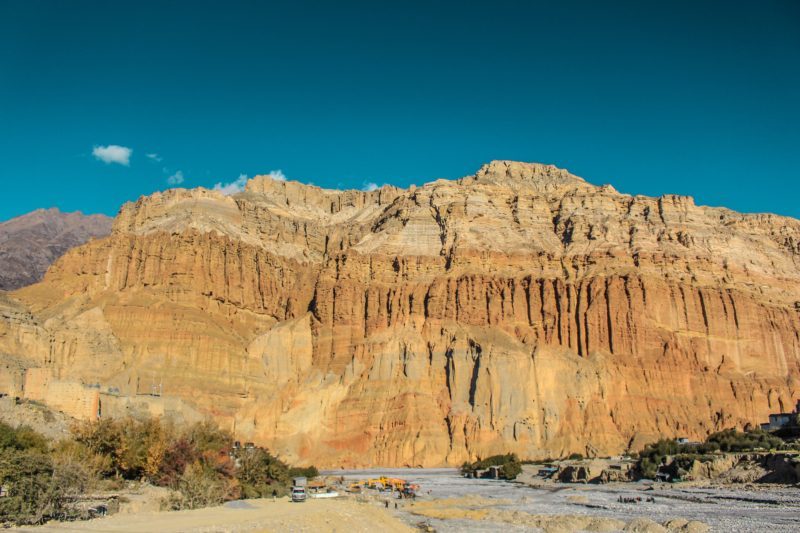
Rainfall can be a major problem during these months and the recommended trekking destination for summer is the arid drylands like Mustang. Mustang Trek is one of the most preferred treks during summer. Mustang, located at an altitude of around 3,500m has a dry, windy and deserted geography.
Trekking in Upper Dolpo, Gokyo Valley and Limi Valley can also be done during summer. The view is mostly clear and the dense vegetation can be observed and the trekking paths are not that hard. While it is hard to get to the steep high altitude mountainous areas, short treks can still be done during monsoon. Everest View Trek and Annapurna View Trek are some of the perfect examples.
Another option for summer is the Kanchenjunga Trek. The trekking trails are dangerous but full of excitement. There is a fear of encountering snowstorms and avalanches in the Kanchenjunga trek during winter and autumn. So, for many, it’s better to go trekking in summer.
Even Though most treks are usually not recommended due to rainfall, many treks to places like Everest Base Camp and Annapurna Base Camp. So, the best idea is to collect info and inquire before planning to trek in Nepal.
Spring Trekking in Nepal
Spring is one of the two best seasons for trekking in Nepal. Blooming of flowers, chirping of birds, greenery and mild weather mark the spring season. Most parts of the hills are green and the forest is dense as the spring season commences.
Trekking trails are decorated with rhododendrons and the view of the mountains at this time is clear. Also, the reflection of mountains on the surface of the serene lakes simmers to manifest an awesome glittery view.
During spring, Everest region treks offer you clear views of majestic mountains including Everest. Tibetan prayer flags fluttering at Kalapatthar with bright colors add amazing decoration to the view. The days of spring are peaceful and bright whereas the nights are full of stars, sparkling brightly. Most treks including Annapurna, Langtang, Everest, Mardi Himal and Kanchenjunga region are favorable during spring.
Autumn Trekking in Nepal
The Autumn season starts in September and ends in November. This is the time when almost all treks are accessible. The rain is not that heavy and the ground easily absorbs the water liberating a smell of fresh soil that gives extra freshness.
The trek routes around Everest and Annapurna region are especially crowded during this time of the year as this is the peak trekking season in Nepal. The weather is perfect for walking even in higher altitude areas with warm days and cold nights.
Autumn brings extra joy and excitement with the two biggest festivals in Nepal also falling in the months of September, October and November. Dashain and Tihar are widely regarded as the biggest Hindu festivals in Nepal. Many chose to visit Nepal during these festivals to get a glimpse of these festivals. It is a good time to trek and also explore the traditional and cultural insights of Nepal during Autumn.
Winter Trekking in Nepal
Winter lasts from December to February in Nepal. The mountainous area is covered with snow and is too cold to trek. Some of the trekking areas in Nepal are not accessible during winter due to the chances of snowstorms and excess snow on the trekking trails. The trekking trails are life-threatening during winter at high altitudes.
Upper Mustang, Upper Dolpo, Humla Limi Village and Rara Lake treks are accessible during the winter months. There’s less snowfall on these trekking trails cutting the risk of a snowstorm during winter.
Trekking at high altitudes is risky during winter so it’s absolutely safe to go for short treks. Short treks like Ghorepani – Poonhill, Kalinchowk, Everest View, Balthali Village, Helambu, Kathmandu Valley and Dhampus – Sarangkot treks are accessible during winter.
Now that you know the best time for different treks in Nepal, you can plan a trek that meets your trekking needs and demands. Every season has its own importance in trekking and you can enjoy trekking around all the seasons. We should be aware of the season, gather info about the trek and plan accordingly, before heading for the trip.
What season are you planning to trek in Nepal? Share your plans below or inquire with us so that we can help you plan an awesome trip.
Top 12 Best Trek in Nepal If you are looking to trek in Nepal and are confused about which trek might be the best fit for you, you’ve come to the right place. This blog will help you know more about the famous treks in Nepal and help you to choose the best fit for you. With plenty of trekking options to choose from, Nepal has a lot to offer. Let’s dive straight into the best treks in Nepal.
Top 12 Best Trek in Nepal Everest Base Camp (EBC) Trek has been one of the greatest treks in the world for many years now. The trek to the base camp of the world’s highest does not need an introduction. You can experience the pristine expanse of the natural wonders with this trek. EBC Trek attracts thousands of travelers every year.
The journey to the foot of the world’s tallest mountain begins with a 40 minutes flight from Kathmandu to Lukla. After that, you trek and it takes around 7-8 days to reach the Everest Base Camp depending on your itinerary. The trek is normally a 12-15 day trek. You will experience the heart-warming Sherpa culture while you pass through the villages of Solukhumbu Everest.
The steep hiking trail to the base camp encompasses Buddhist monasteries, the Dudh Koshi River, a dense forest with distinct vegetation with mesmerizing views of the mountains which adds enthusiasm to your will.
Trek Difficulty
The trekking difficulty of Everest Base Camp Trek is moderate meaning trekkers with average fitness can complete this trek. If you can hike through hills and mountains for a few days, you can complete this trek without much difficulty.
Recommended
The trek is recommended during March, April, May, September, October and November.
If you have less time to go for Everest Base Camp Trek, taking a helicopter to Kalapatthar or Tengboche is recommended.
Not Recommended
EBC trek is not recommended without experienced guides.
The trek is not recommended during rainfall and abnormal weather.
The trek is not recommended for people suffering from Asthma.
Read our Everest Region Trek Blogs for more information.
Top 12 Best Trek in Nepal list of best treks in Nepal can not be complete without this, Annapurna Base Camp Trek (also known as Annapurna Sanctuary Trek or ABC Trek), starting from Nayapul or Ghandruk village. Ghandruk and Nayapul can be reached from Pokhara in less than a day.
It is normally a 10-13 day trek but it can also be customized according to your needs. Annapurna Base Camp Trek has trails covered with greenery and forest. The dense forests are filled with beautiful rhododendrons and bamboo that will make your journey enjoyable. ABC Trek is full of thrill and adventures but is still suitable for first-timers. This adventurous trekking trail is quite popular for the mesmerizing views it has to offer. Along with the Annapurna range, you will get to observe a range of magnificent high peaks such as Machhapuchhre, Langtang, Manaslu and even more. Read our Annapurna Base Camp Trek Blog for more insights on the trek.
During the trip, you can also explore the Gurung village and experience the wonderful culture and the hospitality of the local people. A hot spring bath is also a major attraction of the Annapurna Sanctuary Trek. Walking through dense forest with rich flora and fauna and the deepest gorge of Kali Gandaki are other major highlights of the Annapurna Sanctuary Trek.
Trek Difficulty
With an elevation of only about 4,130m, the Annapurna Base Camp trek is considered to be a lower-altitude trek. So, there is less chance of altitude sickness and fatigue problems.
Recommended
The trek is recommended for trekkers with an average and good level of physical fitness.
Not Recommended
The Annapurna Base Camp trek is not recommended without a professional guide.
Not recommended during winter.
Luggage not to exceed 15 kgs weight.
Read more about the trek on our Annapurna Base Camp Trek Blogs.
Top 12 Best Trek in Nepal If the spellbinding view of the massive Annapurna range is what you seek, then Annapurna Circuit Trek is the right choice for you. Regarded as the most dangerous mountain with an extreme level of difficulty to climb, Annapurna massif is particularly a set of thirteen peaks among which six prominent summits are Annapurna I, Annapurna II, Annapurna III, Annapurna IV, Gangapurna, and Annapurna South.
Annapurna Circuit Trek is famous among trekkers due to its asymmetrical trails. It is the oldest trekking trail which was used in the past as a trade route by Nepalese and Tibetans. The Annapurna Circuit Trekking Trail, encircling the Annapurna massif, starts from Bhulbhule and finally ends at Thorung La pass. If you are on a long vacation then trekking along Annapurna Circuit Trail is recommended for you as it is a 15-day long trek and can be extended up to 20 days or even more.
The trails encompass some beautiful places in Nepal like Manang, Mustang, and Jomsom. The trek provides a panoramic view of some of the highest peaks of Nepal such as the massive Annapurna mountain range, Dhaulagiri Manaslu, Machhapuchhre, Himchuli, Lamjung, and Tukuche peaks. The fertile land of the Annapurna region supports various vegetation so you’ll also get a chance to explore the dense forest and distinct flora and fauna.
Annapurna Round Trek takes you around the thick settlement of the Gurung and Thakali people and offers you to witness the traditional Gurung and Thakali culture. You will get a chance to experience the gift of nature, explore the region and manifest the exotic view of the Himalayas ranges which is attainable from nowhere else in the mountain.
Trek Difficulty
Annapurna Circuit Trek is a comparatively difficult trek. It is a long trek requiring a good level of physical fitness. Endurance is key for this trek. As the trek goes through Thorung La Pass, there are chances of altitude sickness.
Recommended
Recommended trekking months are March to May (Spring) and September to November (Autumn).
Carrying water to keep yourself hydrated is recommended.
Not Recommended
Luggage weight exceeding 15 kg is not recommended.
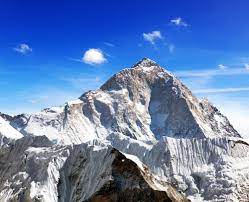
Top 12 Best Trek in Nepal Makalu Base Camp Trek is a real challenge for adventure lovers. With extensively difficult trails, this trek is not permitted for less than two trekkers and without an expert guide. Located in the Eastern part of Nepal, Makalu Base Camp Trekking has the highest elevation of 5,250m.
If you have tried other easy and medium-level treks, and are looking to challenge yourself with difficult and off-beaten treks in Nepal, then Makalu Base Camp Trek is for you. This trek is adventurous and full of wilderness and the trek will test your strength, endurance and also your love for adventure.
Trek Difficulty
The Makalu base camp trek is not for the faint-hearted. As I have already mentioned, it will test your strength and endurance. The trek requires a nice level of physical fitness.
Recommended
The trek is recommended from March-May and September-November.
Luggage should not exceed 15kg weight
Not Recommended
It is not recommended for people with an average level of fitness.
The altitude is really high so consult a doctor before going for it.
Top 12 Best Trek in Nepal Ghorepani Poon Hill Trek can be categorized as a short and easy trek in Nepal. Gurung villages, thick rhododendron forests, panoramic mountain views, and breathtaking sunrise views from the back of the Annapurna mountain range are the main attractions of this trek.
Trek Difficulty
Trekkers with average fitness can complete this trek and enjoy nature. With a maximum height of only 3210m, this trek avoids altitude sickness and fatigue. The trek is comparatively cheap but requires ACAP and TIMS permits.
Recommended
Highly recommended for first-timers and trekkers with average fitness.
The trek is highly recommended if you want to explore Annapurna in a short period of time.
Not Recommended
Not recommended for trekkers who want extreme adventures in Nepal.
Top 12 Best Treks in Nepal Standing high as the world’s eighth-highest mountain, the Manaslu mountain view from the vicinity is a treat to the eyes. Manaslu Circuit Trek is an offbeat trek in remote areas of Nepal. So, you can expect rough and challenging trails for trekking. You will come across some diverse cultures, ethnic groups and topography which makes the trek more interesting and adventurous as well. Manaslu Circuit Trek is normally a 14 days long trek that ends at Larkya La Pass. The trek has the highest elevation of 5,160m and it also demands a high level of physical fitness.
Trek Difficulty
The trek is a moderate trek but is more difficult than the Annapurna Base Camp Trek. Larkya la Pass is also on the trek route, so there are chances of altitude sickness.
Recommended
For those who want to get close to nature
For those who want to try challenging trekking in Nepal
To trek around March-May and October-November
Not Recommended
The trek requires 5-10 hours of walking on different terrains, hills and mountains every day, so it is not recommended for average fitness people.
Langtang Valley is a serene valley at the border of Tibet and Nepal. Enriched with distinct trees, species, and vegetation, Langtang is a beautiful valley blessed with Mother Nature. This rural landscape in the Langtang region of Nepal has numerous tea houses for accommodation. Exploring the biodiversity and Buddhist culture during the Langtang Valley trek is amusing for travellers.
Langtang trek starts from Syabru Besi. Trekking up to the height of 5,000m, we will reach Tserko-Ri. From Tserko-Ri, you will witness the majestic 360-degree view of the entire Langtang Valley. The Langtang trek encompasses the holy Gosainkunda and Kyanjin Gompa. It is a 10 days long trek which is not so difficult for determined and adventure trekkers.
Trek Difficulty
Trekkers with average fitness can go for this trek and enjoy the picturesque view of Langtang Himal.
Regarded as the third highest mountain in the world, Kanchenjunga is a synonym for danger because of its path to reach its top. No one has ever been able to climb this incredible yet dangerous mountain to date. The beauty of Kanchenjunga is no less than a fairy tale, and that may be the reason it attracts trekkers to its difficult trails. The trek is one of the best treks in Nepal among the less ventured areas.
It is a 25-day long trek and requires KCA and RAP permits with other restricted permits. Thus, the Kanchenjunga Trekking Package cost is slightly high compared to other trekking in Nepal.
Trek Difficulty
The Kanchenjunga trek is fairly difficult and is not for people with low levels of physical fitness. The trek takes you through difficult trails and is also remote.
Recommended
For people with an extreme level of fitness
During March-May and October-November
Not Recommended
The trek is not recommended without a guide.
Luggage weight of more than 15 kg is not recommended.
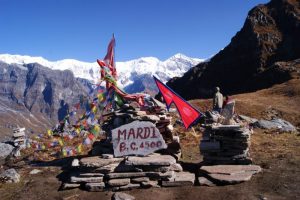
The trails of the Mardi Himal Trek in the Annapurna region make this trek one of the less challenging treks in Nepal. It is a short trek with many aspects of Nepal to discover. The Annapurna trekking trail goes through a dense rhododendron forest that leads to the base of the Mardi Himal (4,500m).
The high mountains like Mardi Himal, Annapurna, Machhapuchhre, and Hiuchuli are clearly visible during Mardi Himal Trek. The winding Annapurna Trails are rough so you can expect a challenge as well as an adventure. Enjoy the solitude and explore the middle part of Nepal with the background of some majestic mountains and pristine nature. At Heaven Nepal Adventure, Mardi Himal Trek is an 8 days package.
Trek Difficulty
Trekkers with an average level of fitness can complete this trek without much tiredness and fatigue. This trek doesn’t require any permit and is accessible in winter, unlike some other treks in Nepal.
Recommended
For first-timers, Mardi Himal Trekking is well challenging and adventurous.
From March to May, and September to November.
Not Recommended
The trek is not recommended for experienced trekkers seeking thrills and adventure.
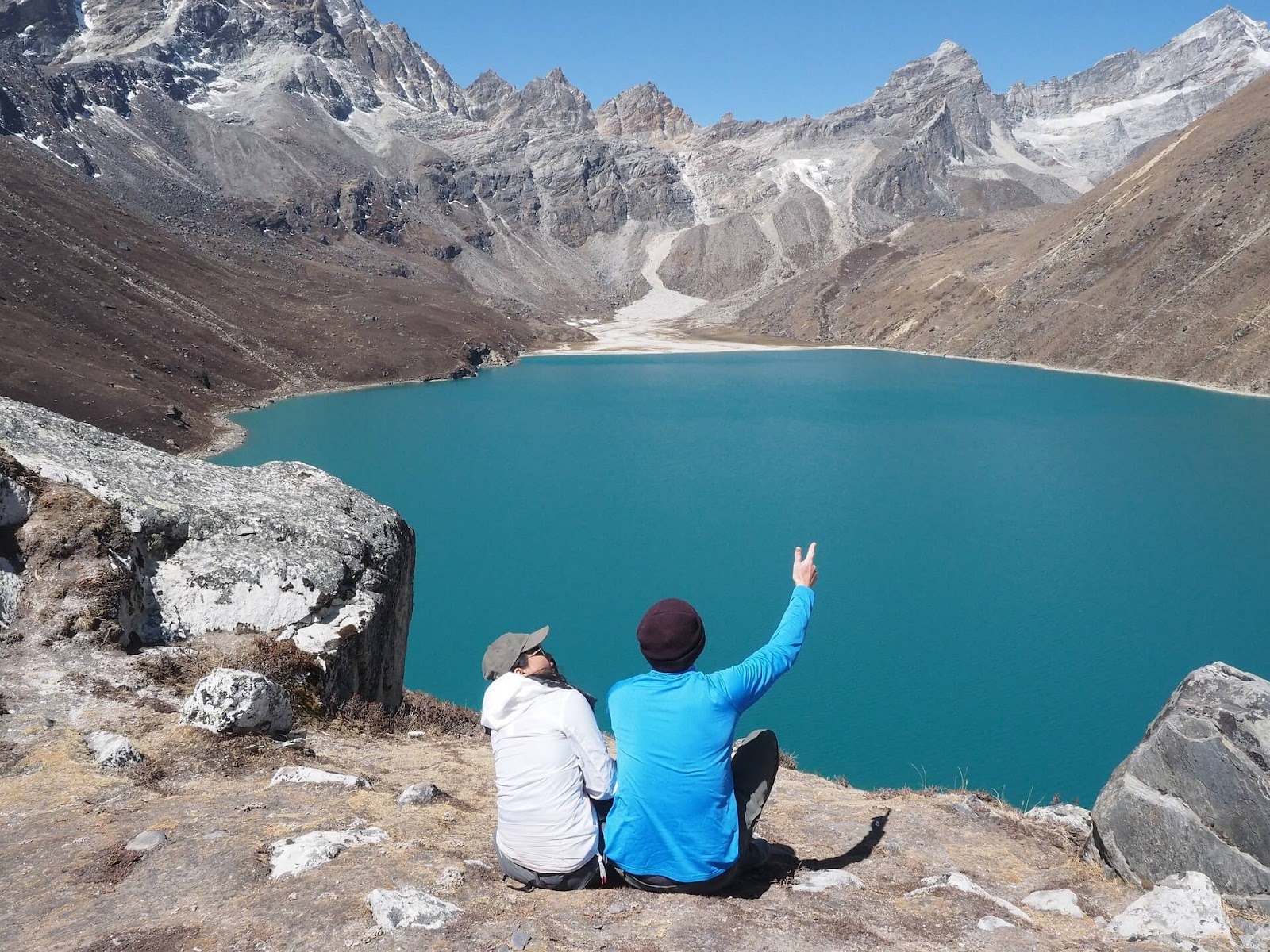
Gokyo is a small village located in the Eastern part of Nepal at an elevation of 4,750m. The trek is considered an alternative trek to the Everest Base Camp Trek because the trekking path of the Gokyo Valley Trek is less rough and challenging. The trek still offers a magnificent view of the Mount Everest range along with the Longpongo Lake, Gokyo Lake, Taboche Tsho Lake, Cho Oyu Himal, and Ngozumpa Glacier. It is normally a 15-day trek.
Trek Difficulty
Gokyo Valley Trek is a moderate trek and can be accomplished by trekkers with an average level of physical fitness.
Recommended
The trek is recommended from March to May and September to November.
Not Recommended
The trek is not recommended during extreme winters.
Another long and venturesome trek in Nepal is at the secluded northern part of the Mustang. The isolated yet captivating barren land of Upper Mustang can be explored with Upper Mustang Trek. The trek takes you to an elevation of 3,800m and with most of its remote trails, is considered an off-beaten trek.
The exceptional geography of Upper Mustang is dry and deserted yet surrounded by majestic mountains giving a spectacular view to cherish. The temples, monasteries, Tibetan prayer flags, tea houses, and huge stones with bizarre structures add glamour to the beauty of this Upper Mustang Trek. With not much human population, Tibetan culture has been preserved for centuries in the Upper Mustang areas.
A 15-day long trip to the Upper Mustang Trek from Heaven Nepal Adventure starts from Pokhara or Kagbeni and it requires special permits too. The trek is accessible during winter but the trek is really harsh so you must be physically and mentally prepared.
Trek Difficulty
Top 12 Trek in Nepal one of the mustang trek does not take you to very high-altitude areas but requires good physical fitness.
Recommended
From March to May, September to November
To proceed with two or more trekkers along with a professional guide
Top 12 Best Trek in Nepal geographically rich Upper Dolpo is an isolated trekking destination due to its remoteness and challenging trekking trails. The upper Dolpo trekking trail stretches to the apex of Magdalena Pass, Shey La Pass, and Jeng La Pass.
This elongated 25 days of trekking is challenging yet the view of Kanjirowa Mountain and the mesmerizing Phoksundo Lake captivates the trekkers which makes them forget the struggle and tiredness.
Upper Dolpo Trek is a great way to explore the typical Tibetan culture and monasteries. The beauty of Dolpo was manifested in the 1999 Academy Award-winning movie Himalaya and it has helped this remote Upper Dolpo Trekking attract some trekkers. The trekkers should acquire some special permits. If you are looking for less ventured trekking areas, this is one of the best treks in Nepal for you.
Trek Difficulty
Upper Dolpo trek requires an average level of fitness as the trekking trails are not that unusual and rocky.
Recommended
The trek is recommended from March to May and September to November
It is recommended to proceed with two or more trekkers along with a professional guide
Not Recommended
It is not recommended for people with altitude sickness.
So, that’s the list of best treks in Nepal and until now, you might have made up your mind on which trek is the best for you. These treks are only some of the options and you might also have other trekking ideas. Inquire us if you want any information about trekking in Nepal.